A Rabbit Fur Carpet can bring softness, warmth, and a gentle texture to a bedroom, reading nook, or quiet corner. In 2026, shoppers will find options in varied sizes, shades, pile lengths, and backing materials. The right choice depends on more than appearance. Consider where the rug will sit, how often people walk across it, and whether its care requirements fit your routine. A pale, plush surface may look inviting beside a bed, but it can show dust and marks more readily. Soft, but not effortless.
This guide introduces seven rabbit fur carpet options for home decor, with attention to texture, construction, sizing, and everyday upkeep. Product descriptions can use similar language while referring to different materials, so check the fiber details and care label before buying. That distinction is easy to miss. Look closely at backing quality, stitching, and whether the pile sheds during normal handling; these details can affect how a rug feels and holds up. If the listing leaves key points unclear, contact the seller rather than relying on photographs alone. Personal taste matters, too: a thick rug may feel cozy underfoot, yet sit awkwardly beneath a door or furniture leg. Not every room needs one. The selections ahead are intended to help you compare practical features alongside style, while leaving room for a sensible question: will this carpet still suit your home after the first impression fades?
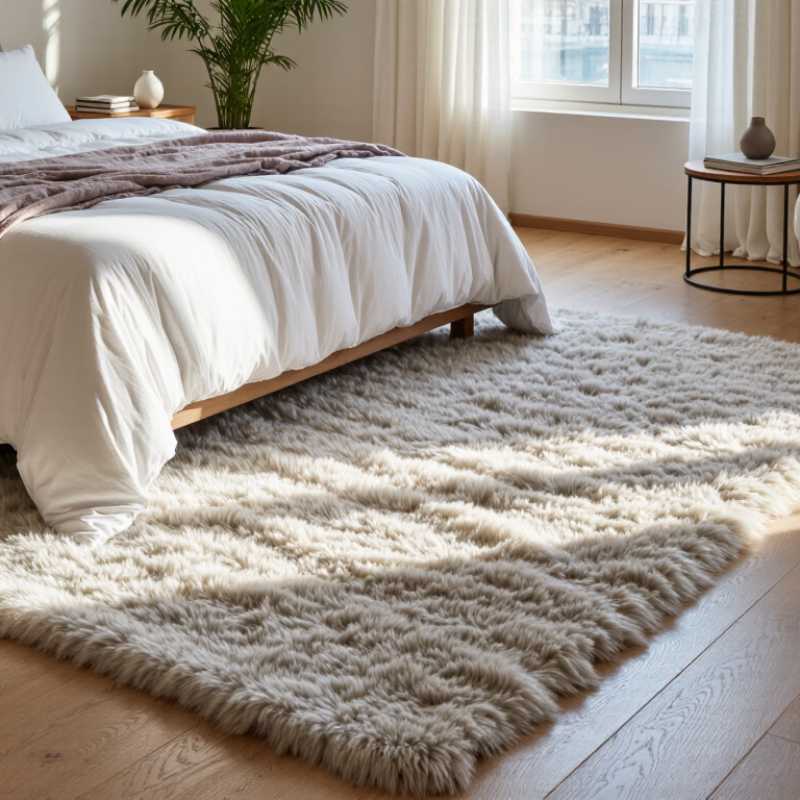
Rabbit-fur carpets differ in pelt layout, shape, pile finish, and backing. The label alone tells little. Check the nap and underside.
A single-pelt hide keeps its naturally uneven outline and suits a chair-side accent. A multi-pelt patchwork rug joins smaller pelts into a rectangle, with seams that may show. Round designs arrange pelts around a center; square grid styles align them in rows. A narrow runner fits hallways. These shapes affect placement more than warmth.
Sheared-pile styles look flatter, while long-pile styles feel fuller but catch crumbs more easily. Soft, but delicate.
Backing matters. Woven cloth can hold joined pelts together; suede-like or leather backing adds weight and structure. Some rugs include a non-slip textile layer, though its grip varies by floor surface. Check edge stitching, seam tension, and whether the backing is firmly attached.
Ask how the pelt was finished and which cleaning method is recommended, since care needs differ. I wouldn’t assume a heavier rug is automatically better. A dense one can still curl at the corners. That detail is easy to miss.
When comparing rabbit fur carpets, record length and width with the rug resting flat, without stretching the hide or pressing its edges into shape. Natural outlines can be uneven, so note the widest and longest points rather than assuming a perfect rectangle. A tape measure gives a useful home check. Small differences matter.
Thickness needs more care. ISO 1765 describes a method for measuring textile floor-covering thickness under specified conditions, but a fur hide may not fit the standard’s scope. Check the product construction and measurement method before treating figures as directly comparable. Fur compresses under pressure, and loose pile can make a ruler reading misleading. Ask whether thickness means the backing, the pile, or the full rug, and whether it was measured under load. I would compare rugs only when the same method is stated; otherwise, the number can look precise without being very helpful. For everyday use, consider how the rug sits beneath a door and whether its edges lie flat on the floor.
For rabbit-fur carpets, weight can help compare samples, but it does not prove one will wear longer. ISO 8543:1998, Textile floor coverings—Methods for determination of mass, describes ways to measure mass per unit area. Its methods are relevant only when the carpet’s construction falls within the standard’s scope; a loose animal-hide surface should not automatically be treated as textile pile. Not a durability score. Ask for the tested area, total mass, and whether the backing was included. Without those details, two figures may not be comparable.
A simple check is to weigh equal-sized samples and report the result in grams per square metre. For example, a 30-centimetre-square swatch weighing 180 grams calculates to 2,000 g/m²; this is an example calculation, not an industry benchmark. ISO 8543 provides a measurement framework, not a universal “good” weight or wear-life rating. That distinction matters. In a room, a dense, heavy rug may sit steadily under a coffee table, yet crushed or matted fur can still look worn along a doorway. Compare surface mass alongside pile condition, backing, and care instructions, and treat supplier figures cautiously when test methods are not stated. I would also note that hand-cut edges and uneven fur can make small samples misleading.
Before buying a rabbit-fur carpet, ask whether an ISO 9239-1 test report covers the exact rug construction. The test evaluates how a floor covering responds to radiant heat under controlled conditions. Its result is not a guarantee that a rug is safe in every home. Check that the report names the relevant materials, including the backing, and matches the product being sold. A different backing or underlay may change how the assembly behaves. That detail matters.
Keep the carpet away from fireplaces, candles, and portable heaters, even when test results are available. Read the fur-origin label carefully. It should identify the animal species and provide clear information about where the fur came from. Ask for supporting sourcing documents if the label is vague or missing. A seller may not have every detail to hand; that is a reason to pause, not guess. Labels and test reports can be confusing, and I would not rely on a reassuring phrase alone. Request the full report and check its date and sample description. Then compare those details with the rug in front of you.
These are seven construction-based selection profiles, not independently tested or ranked products. No ISO 9239-1 test results are asserted here; request a report for the exact rug construction before relying on a fire-performance claim.
| Selection profile | Construction to look for | Decor use | Fire-safety evidence | Fur-origin and sourcing checks | Practical care notes |
|---|---|---|---|---|---|
| 1. Single-pelt accent rug | One rabbit pelt with its hide retained; dimensions and shape depend on the individual pelt. | Small accent area beside furniture or layered over a larger rug. | No result should be assumed. Ask whether the finished rug was tested to ISO 9239-1 and request the report, including the critical radiant flux result and sample description. | Request the animal species and country of origin in writing. Check that the product label and seller’s description are consistent. | Keep away from open flames and hot surfaces. Follow the maker’s cleaning instructions; do not assume it is machine washable. |
| 2. Multi-pelt patchwork rug | Multiple rabbit pelts joined together, often with a separate backing. Seams and backing can affect the finished construction. | A larger decorative feature in a low-traffic room. | Ask for a test report covering the complete rug construction, including its backing. A report for loose fur or a different backing does not establish the performance of this rug. | Check whether origin information applies to all pelts, rather than only the place where the rug was assembled. | Inspect seams periodically and avoid dragging heavy furniture across the rug. |
| 3. Rabbit-fur panel rug with textile backing | Rabbit fur panels attached to a textile backing; backing fiber and attachment method should be disclosed. | Decorative placement on a stable floor or over a compatible rug pad. | Request the ISO 9239-1 report for the same fur, backing, and assembly. The standard evaluates the burning behaviour of floor coverings using a radiant heat source; it does not certify every aspect of home fire safety. | Look for species and country-of-origin details, plus clear information about who supplied or assembled the panels. | Use only a rug pad suitable for the floor type and follow both the rug and pad care instructions. |
| 4. Bordered rabbit-fur rug | Rabbit-fur center with a contrasting textile or leather-style border; materials should be listed separately. | A framed accent under a small table or in a sitting area. | Confirm that any fire-test report describes the complete bordered rug. A result for the central fur alone may not represent the finished item. | Ask for origin information for the fur and for a separate description of the border material. | Keep the rug flat and dry; follow the manufacturer’s instructions for cleaning mixed materials. |
| 5. Shaped rabbit-fur bedside rug | Small cut or shaped pelt, sometimes with a backing intended to help it lie flat. | A low-traffic bedside or dressing-area accent. | Do not treat “natural” or “untreated” as a fire rating. Request a relevant test report if fire performance is important for the intended location. | Check the label for the fur species and country of origin; request clarification if it says only “imported” or gives the assembly location. | Keep clear of heaters, candles, and electrical devices that may become hot. Check that the rug does not create a trip hazard. |
| 6. Rabbit-fur runner | Elongated construction made from joined pelts or fur panels; inspect the joins and backing. | Decorative use in a low-traffic passage where the rug can lie securely. | If a seller cites ISO 9239-1, request the laboratory report and verify the tested specimen matches the runner’s materials and construction. | Request traceable origin details for the fur and check whether the seller can identify the source country for the supplied item. | Use a suitable non-slip underlay where appropriate. Avoid placing it where edges can curl or obstruct walking. |
| 7. Rabbit-fur rug with removable underlay | Fur rug paired with a separate underlay; the underlay is a distinct component and may have different materials. | Flexible decorative placement where the rug and underlay can be maintained separately. | Ask whether testing covers the rug alone, the underlay alone, or the complete installed combination. Do not infer a result for one component from a report for another. | Check fur-origin details on the rug itself or its accompanying documentation; an underlay label does not establish fur origin. | Follow separate care instructions for the fur and underlay. Replace an underlay that becomes damaged or no longer stays in place. |
ISO 9239-1 is a floor-covering reaction-to-fire test method that uses a radiant heat source and reports critical radiant flux. Ask for the laboratory, test date, report number, tested specimen details, and result; confirm that these correspond to the exact rug being considered. Fur-label and origin-disclosure requirements vary by jurisdiction, so check applicable local rules and retain the seller’s written sourcing information.
A rabbit-fur carpet suits a quiet bedroom or reading nook better than a busy entryway. Its long pile can trap grit, while repeated footsteps flatten the soft tips. Keep it away from kitchen sinks, patio doors, and damp bathrooms. Moisture can leave fur matted and may affect the backing.
Accidents happen.
For everyday care, lift dust with gentle shaking outdoors or a low-suction vacuum, following the rug’s care label. Don’t scrub; blot small spills promptly with a clean, dry cloth. Skip soaking, steam, and strong cleaners unless the maker confirms they are safe for that construction.
The IICRC S100 Standard for Professional Cleaning of Textile Floor Coverings stresses that cleaning methods should suit the material and its condition. That matters here: “rabbit fur” products may use different backings and finishes. For a valuable rug, ask a textile-cleaning professional before treating stains. One caution: a sunny window looks inviting, but prolonged direct light can fade or dry delicate fibers. Rotate the rug occasionally, and accept that a pale, fluffy surface may need more attention than a flat-woven floor covering.