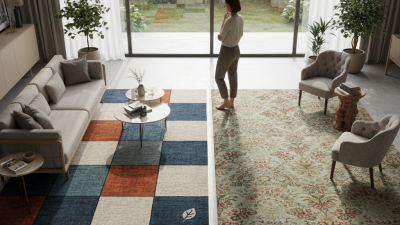
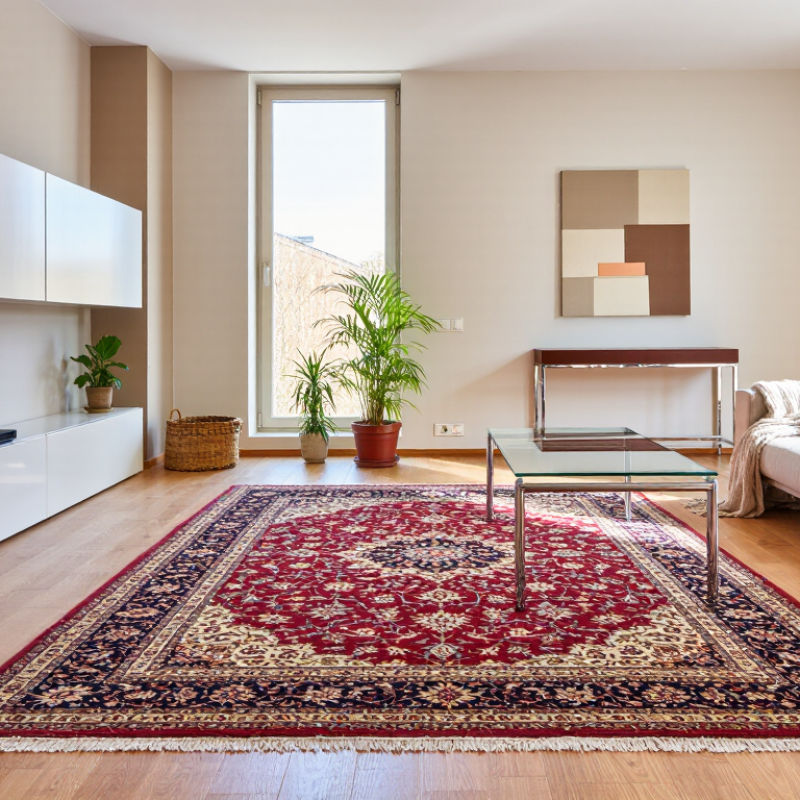
A Red Living Room Rug can change a room within minutes. It adds warmth beneath a glass coffee table, energy beside a cream sofa, and visual weight across pale wood flooring. Yet red is rarely a neutral choice. Its undertones, pile height, pattern scale, and light exposure can make the same rug feel elegant, dated, or overwhelming.
Market evidence supports this growing interest in expressive interiors. Grand View Research’s Home Decor Market Size, Share & Trends Analysis Report identifies personalization and decorative upgrades as important forces in the global home décor market. Its analysis projects continued market growth through 2030. The American Society of Interior Designers also highlights comfort, wellness, and individual expression in its 2024 Trends Outlook. These findings matter because a rug is not only decoration. It affects acoustics, walking comfort, furniture balance, and the room’s emotional temperature.
This guide examines seven red living room rugs for different design preferences. The selection includes traditional Persian-inspired patterns, modern geometric styles, washable options, and soft low-pile designs. Each choice considers material, maintenance, color balance, and everyday use. Wool may offer resilience and richer texture, while synthetic fibers often simplify cleaning and reduce cost. The perfect option does not exist for every household. A beautiful high-pile rug may trap crumbs, and a vivid crimson pattern may compete with artwork. That honest limitation deserves attention. Use these recommendations as a practical starting point, then test samples beside your sofa and under natural daylight.
Understanding Red Rugs in Living Room Design
A red rug can set the emotional temperature of a living room. It may feel warm, lively, traditional, or surprisingly calm. The result depends on shade, pattern, texture, and surrounding light. A deep burgundy Persian-inspired rug suits wood furniture and cream walls. A geometric red rug adds structure to a modern space. Start with scale. The rug should usually reach beneath the front legs of major seating.
For softer rooms, choose a faded vintage design with muted red, beige, and charcoal. A solid red rug creates stronger drama, but it can overwhelm small rooms. I once placed one beside bright curtains, and the space felt restless by afternoon. Natural light changes red noticeably. Test a fabric sample near windows, lamps, and shaded corners before buying. Color changes.
Texture also affects how red is experienced. A shag rug makes crimson feel relaxed and casual, while a flat-woven kilim feels sharper and more crafted. A red rug with small botanical details can balance plain sofas without competing with artwork. Natural-fiber rugs with red accents work well when you want warmth without visual heaviness. Keep nearby cushions or ceramics within the rug’s secondary colors. Perfect matching is unnecessary. Too much coordination can make the room feel staged. Consider cleaning needs, furniture weight, and walking paths before choosing among these seven styles.
7 Best Red Living Room Rugs for Every Style
Choosing the right red shade starts with your room’s light, flooring, and existing accents. A blue-red rug suits crisp white walls and modern furniture. An orange-red rug warms oak floors and terracotta accessories. Burgundy creates a quieter, library-like mood, while brick red feels relaxed and handcrafted. For softer interiors, try dusty rose. Cherry red adds energy but can dominate quickly. Rust works especially well with leather, linen, and natural wood.
The global area rugs market was valued at approximately $11.9 billion in 2023, according to Grand View Research. Its projected 4.8% annual growth reflects continued interest in layered, expressive flooring. That does not make every bold rug a smart purchase. Houzz’s 2024 home design reporting also emphasizes personalized spaces and natural influences, supporting earthy reds over overly artificial tones. Test a 60-by-90-centimeter sample beside your sofa before ordering. Daylight changes everything. It can expose an unwanted pink cast.
For seven style directions, consider crimson for contemporary rooms, burgundy for traditional spaces, rust for rustic rooms, terracotta for Mediterranean schemes, brick for industrial settings, dusty rose for gentle interiors, and ruby for eclectic layering. Keep surrounding patterns restrained. One mistake is matching the rug to a single cushion. Repeat its undertone through curtains, ceramics, or artwork instead. I sometimes prefer a slightly imperfect vintage pattern, because uniform red can feel flat. Clearance matters too. Leave visible flooring around the rug, or the room may look smaller.
Choosing the right red shade for your decor style
Lightness and saturation are calculated from representative red shade values. Darker, muted reds suit traditional and glamorous rooms, while brighter or warmer reds work well with bohemian, industrial, and Southwestern interiors.
Red rugs can warm a living room, but material determines how well that color performs. Wool offers natural resilience, soft texture, and strong shape retention. It suits classic, modern, and layered interiors. Some shedding is normal during the first months. A tightly woven cotton rug feels lighter and easier to move, but it may flatten sooner beneath sofas. It works best in smaller rooms or low-traffic seating areas.
For busy homes, polypropylene provides useful stain resistance and consistent color. Its texture can imitate wool, although it may feel less rich under bare feet. Polyester often delivers vivid red tones and a smoother surface. However, heavy furniture can leave lasting impressions. Jute adds visible fibers and an earthy contrast, yet its roughness may irritate sensitive feet. It also dislikes prolonged moisture. Viscose creates a gentle sheen that changes with the light, but it is less forgiving around spills and repeated walking.
Pile height changes the room. A low pile allows doors and chairs to move easily, while a thick pile feels warmer and more luxurious. Flatweaves are practical near dining areas, though they offer less cushioning. A common mistake is choosing texture from a sample alone. View the rug beside your sofa during daytime and evening. Deep red can appear brown under warm bulbs. Use a rug pad to reduce sliding and protect the backing. No material wins everywhere. Durability depends on cleaning habits, sunlight, pets, and furniture pressure.
Red rugs can anchor seven distinct living-room styles: Persian-inspired, geometric, vintage, solid, abstract, flatweave, and textured shag. Each needs careful sizing.
The 2024 U.S. Houzz & Home Study analyzed responses from more than 33,000 homeowners. Its renovation data reinforces a practical point: living rooms remain frequent improvement areas. Measure before choosing color. A 5-by-8-foot rug suits a compact seating group. An 8-by-10-foot rug usually fits a standard conversation area. Larger rooms may need a 9-by-12-foot rug, especially around sectional seating. Keep at least the front legs of every sofa and chair on the rug. This connects the furniture visually. For a more tailored layout, place all furniture fully on the rug. Leave roughly 18 inches of visible flooring around the perimeter when possible. That rule can fail in narrow rooms.
Tips: Mark the proposed rug with painter’s tape. Walk around it for one day. Check door swings and main pathways. Interior planning guidance often allows 30–36 inches for comfortable circulation, but real homes rarely feel perfectly measured. A deep red Persian-style rug suits traditional rooms, while a low-pile geometric design feels sharper in modern spaces. Flatweave rugs work well beneath dining-height coffee tables. Shag styles need more clearance and regular care. I would avoid forcing symmetry. Slightly imperfect placement can feel more natural. Recheck the room at night, because red may appear heavier under warm lighting.
| # | Rug Style | Recommended Size | Ideal Room Size | Placement | Material & Pile | Color Combination | Best For | Care Level |
|---|---|---|---|---|---|---|---|---|
| 1 | Traditional Persian-Inspired | 8 × 10 ft (244 × 305 cm) |
12 × 15 ft or larger | Center beneath the seating group, with all sofa and chair legs on the rug. | Wool or wool blend; low to medium pile | Deep red, ivory, navy, and muted gold | Classic, formal, and layered interiors | Moderate; vacuum gently and rotate periodically. |
| 2 | Modern Geometric | 6 × 9 ft (183 × 274 cm) |
10 × 12 ft to 12 × 14 ft | Place under the front two legs of the sofa and chairs, leaving a visible floor border. | Polypropylene or wool; low pile | Brick red, charcoal, cream, and black | Contemporary and minimalist rooms | Easy; low-pile fibers are practical for frequent vacuuming. |
| 3 | Vintage Distressed | 8 × 10 ft (244 × 305 cm) |
12 × 15 ft or larger | Align the rug with the sofa and coffee table; keep at least the front legs on the rug. | Cotton, polyester, or synthetic blend; low pile | Faded red, terracotta, beige, and blue-gray | Bohemian, farmhouse, and relaxed spaces | Easy; the tonal pattern helps disguise everyday marks. |
| 4 | Solid Ruby Shag | 5 × 8 ft (152 × 244 cm) |
10 × 12 ft or smaller | Float it in front of the sofa with the coffee table centered on top. | Polyester or polypropylene; high pile | Solid ruby or cranberry red | Cozy, glamorous, and texture-focused rooms | Higher; use suction-only vacuuming and address spills promptly. |
| 5 | Red-and-Cream Striped | 6 × 9 ft (183 × 274 cm) |
10 × 12 ft to 12 × 14 ft | Run the stripes parallel to the longest wall to visually emphasize room length. | Flatweave wool or cotton; low pile | Warm red, cream, and subtle tan | Coastal, cottage, and casual traditional décor | Easy; flatweave construction is simple to vacuum. |
| 6 | Round Medallion | 8 ft round (244 cm diameter) |
Rooms with a defined seating zone | Center beneath a round coffee table and allow the seating to frame the rug. | Wool or synthetic blend; low to medium pile | Rust red, ivory, bronze, and muted teal | Eclectic rooms and square or open-plan layouts | Moderate; rotate to distribute wear evenly. |
| 7 | Indoor-Outdoor Red Pattern | 5 × 7 ft (152 × 213 cm) |
Small living rooms, apartments, or entry seating areas | Place fully beneath the coffee table or beneath the front legs of a compact sofa. | Polypropylene; flat or low pile | Red, sand, charcoal, and cream | Homes with children, pets, or frequent foot traffic | Low; shake out, spot-clean, and air-dry thoroughly. |
Size guide: Leave approximately 8–18 inches (20–46 cm) of visible floor around the rug when possible. In most living rooms, a larger rug that connects the seating area creates a more cohesive arrangement than a small rug placed only under the coffee table.
7 Best Red Living Room Rugs for Every Style
Red rugs can serve seven distinct interior themes. A Persian-inspired rug suits traditional rooms, especially beside walnut furniture. Its faded crimson and detailed border add visual history. A geometric red rug feels sharper in contemporary spaces. Choose clean diamonds or blocks near glass and metal.
For Moroccan interiors, select a red rug with irregular lines and a soft pile. A Scandinavian room benefits from muted brick red and simple shapes. Vintage style welcomes distressed patterns, though excessive fading can look accidental. A bohemian room can handle layered reds, rust, and ochre. For modern minimalism, use one solid red rug with a restrained texture. Grand View Research’s 2024 carpet and rugs analysis projects market growth of approximately 4.7% annually through 2030, reflecting continued demand for expressive floor coverings. Still, trend data cannot replace room-scale judgment.
Tips: Test a 60-centimeter sample first. View it in daylight and warm light. Keep at least the front legs of major seating on the rug. The U.S. Environmental Protection Agency reports indoor pollutant levels can be two to five times higher than outdoors, so choose low-emission materials and ventilate after installation. I once selected a beautiful deep-red rug that overwhelmed a small room. The mistake was not the color. It was the scale. Check the rug’s backing, fiber density, and cleaning instructions before buying. Rug performance varies more than photographs suggest.