Choosing the best Small Kitchen Carpet from China requires more than comparing colors and prices. A suitable rug must handle crumbs, splashes, chair movement, and daily foot traffic. In a compact kitchen, even a few centimeters can affect cabinet doors and walking space. Common practical sizes include 50 × 80 cm and 60 × 90 cm. However, measuring your floor remains essential.
This guide examines materials, backing, edge finishing, cleaning performance, and supplier reliability. Polypropylene often offers practical stain resistance, while cotton blends can feel softer underfoot. A low-pile surface is usually easier to vacuum near cooking areas. The backing should grip smooth tile without leaving a sticky residue. Check whether the edges lie flat after shipping. Curled corners are a small problem until someone trips.
Reliable Chinese manufacturers should provide clear specifications, sample options, production photos, and consistent communication. Buyers should also ask about colorfastness, washing instructions, packaging, and independent quality checks. Product claims need evidence. “Waterproof” may only describe the backing, not the entire carpet. That distinction matters.
The best choice is not automatically the cheapest one. It depends on your kitchen layout, cleaning habits, and household needs. I may value easy washing more than luxury texture, and another buyer may reasonably disagree. No single test captures long-term use perfectly. Still, careful comparison can reduce surprises and reveal which Small Kitchen Carpet offers genuine everyday value. Expect minor imperfections, such as slight color variation or compressed pile after delivery. They deserve attention, but not every flaw makes a product unsuitable.
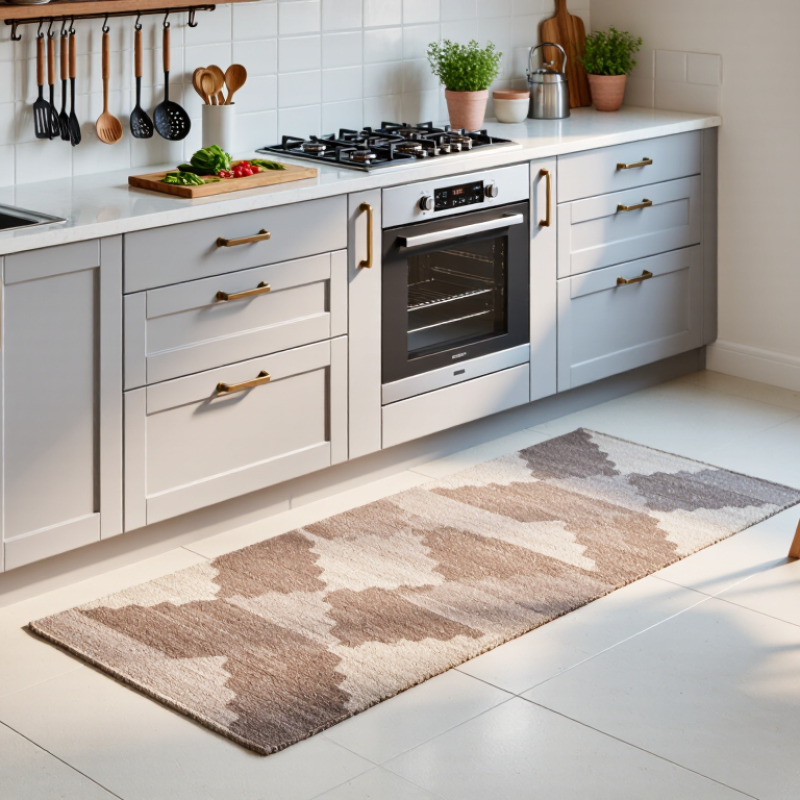
A small kitchen carpet from China should be judged by function, not appearance alone. The best option usually has a low pile, firm edge stitching, and a backing that grips smooth floors. These features reduce tripping and make sweeping easier. Polyester dries quickly and resists everyday stains, while cotton feels softer but may hold moisture longer.
Check the product measurements carefully. A 50-by-80-centimeter rug can fit beside a sink without blocking cabinet doors.
In practical use, comfort matters when someone stands near the counter for several minutes. A thin cushion can reduce foot fatigue, but excessive thickness may catch under doors. Look for clear material details, washing instructions, and consistent customer feedback.
Reliable suppliers should provide sample photos, size tolerances, and basic quality inspection information. One detail I would not ignore is odor after unpacking. It may fade with ventilation, but strong or lasting odor suggests poor material control.
No carpet is perfect. A highly absorbent surface can also dry slowly.
Tips: Place a non-slip pad underneath if the backing moves. Test the carpet beside the sink for one week. Check whether water marks remain after drying. Choose darker patterns for busy cooking areas, but inspect the weave closely. Loose threads can appear attractive at first. They may become a maintenance problem.
What Is the Best Small Kitchen Carpet from China? The answer depends on material, size, and construction quality.
Nylon offers strong abrasion resistance and suits busy cooking areas.
Polypropylene resists moisture and stains, but it can feel less soft.
Cotton feels warmer and more natural, although frequent washing may cause shrinkage.
Grand View Research’s 2024 Carpets and Rugs Market report places the global market above US$70 billion in 2023, showing the importance of material performance and product testing.
For a narrow galley kitchen, a 2×3-foot carpet fits near the sink. A 2×6-foot runner works better beside a long counter.
Low pile construction traps less flour and crumbs. Tufted carpets often cost less, while woven construction usually provides better dimensional stability.
Check the backing carefully. Thermoplastic rubber or latex-free backing can improve grip, but some products curl after repeated washing.
I once chose a thick carpet that looked comfortable. It became a cleaning problem. That was a poor judgment.
Tips:
Ask Chinese suppliers for fiber composition, pile height, total weight, edge-binding photos, and wash-test results. Request a physical sample before ordering.
The Carpet and Rug Institute explains that independent testing can evaluate emissions and performance, but a certification is not proof of perfect kitchen durability.
Also inspect corner flatness after washing. A small flaw matters near a wet sink. Choose neutral colors, but remember that very pale surfaces reveal every coffee drop.
Choosing the best small kitchen carpet from China requires more than checking color, pile height, and price. The manufacturer’s quality system matters just as much. During supplier evaluations, I look for clear factory records, material traceability, and repeatable production controls. A clean sample room helps, but it proves little alone.
ISO 9001 certification can indicate documented quality procedures, yet buyers should verify its scope and validity. It may cover the factory, not every carpet product. For textiles, OEKO-TEX Standard 100 testing can help confirm limits on selected harmful substances. Exporters may also provide REACH-related test reports for European orders or CPSIA documentation for the United States. These requirements differ by market. Ask for current reports, testing laboratories, report numbers, and matching material descriptions.
Details reveal manufacturing discipline. Check whether the anti-slip backing stays flat after washing. Rub the surface with a damp white cloth and inspect color transfer. Measure the carpet after drying; small shrinkage can affect cabinet clearance. I also compare three samples from different production batches. They should have similar edges, density, and backing odor.
Be careful with impressive-looking certificates. Some documents are expired, incomplete, or issued for another product. I once treated a polished report as strong evidence, then noticed its tested fabric differed from the final backing. That mistake changed my checklist. Independent pre-shipment inspection remains useful, especially for first orders. No certificate replaces physical testing and honest supplier communication.
Comparing textile formaldehyde limits used in China’s GB 18401 standard can help buyers assess product-safety documentation when evaluating small kitchen carpets.
Lower limits indicate stricter requirements. GB 18401-2010 sets formaldehyde limits of 20 mg/kg for Class A, 75 mg/kg for Class B, and 300 mg/kg for Class C textile products. Buyers should request an applicable test report, confirm the carpet’s material and intended use, and also check relevant quality-management or chemical-compliance documentation.
What Is the Best Small Kitchen Carpet from China?
For kitchen safety, I would choose a low-pile polypropylene carpet with a firm, non-slip backing. It should sit flat beside the sink or cooking area. Avoid thick, fluffy fibers. They trap crumbs, absorb spills, and can catch under shoes. The U.S. National Fire Protection Association reported 158,400 home cooking fires annually from 2017 to 2021. Unattended cooking caused 38% of these fires. A carpet cannot prevent flames, but a stable surface can reduce slips during hurried cooking. Keep it away from burners and open heat.
Easy cleaning matters every day. Look for machine-washable construction, sealed edges, and colorfast fibers. Polypropylene is practical because it resists moisture and dries relatively quickly. However, “washable” should not be accepted without testing details. Ask a Chinese supplier for fiber composition, backing material, washing instructions, and independent colorfastness results. The Carpet and Rug Institute recommends regular vacuuming and prompt spill removal for maintaining carpet hygiene. I would also inspect the underside after washing. Some rubber backings crack or become sticky.
My own mistake was choosing appearance over edge stability. It looked attractive, but curled corners created a small trip point. That lesson still matters. Select a size that does not block cabinet doors. Press every corner before buying. Leave enough clearance around the stove. Shorter is often safer. A washable runner with a textured, securely bonded backing usually offers the best balance for a compact kitchen.
When ordering a small kitchen carpet from China, begin with a precise specification sheet. State the required size, pile height, fiber content, backing, edge finish, and color tolerance. Request a physical sample before approving bulk production. Photos can hide uneven stitching and inaccurate shades. Ask the supplier for care instructions and material documentation. Clear records reduce avoidable disputes.
Inspect the sample under strong daylight. Measure its length, width, and thickness with a ruler. Check whether the corners lie flat on a hard floor. Rub a white cloth across the surface to detect loose dye. Pull the edge gently. It should not unravel easily. Smell the backing, too. A strong chemical odor deserves further questions and, if needed, independent testing. My first checklist missed the backing thickness, which later affected how securely the carpet stayed in place. That was a useful mistake.
After delivery, open the package in a dry, ventilated area. Photograph the outer carton and carpet condition immediately. Compare the received item with the approved sample and written specifications. For daily care, shake out crumbs, vacuum with low suction, and clean spills quickly with mild detergent. Avoid soaking unless the care label permits it. Dry the carpet completely before reuse. Rotate it every few weeks to reduce uneven wear. Kitchen grease is stubborn. If the carpet curls, stop using it until the backing settles or is professionally assessed.
| Carpet Type | Suitable Small-Kitchen Size | Typical Pile Height | Main Advantages | Limitations | Inspection Priorities | Recommended Maintenance |
|---|---|---|---|---|---|---|
| Low-pile polypropylene | 45 × 75 cm or 60 × 90 cm | 3–6 mm | Resists moisture, dries relatively quickly, and is generally easy to clean. | Can flatten in heavy-traffic areas and may retain oily kitchen stains. | Check edge binding, backing adhesion, color consistency, and odor after unpacking. | Vacuum weekly; blot spills immediately; wash only according to the care label. |
| Polyester flatweave | 50 × 80 cm or 60 × 120 cm | 2–4 mm | Lightweight, compact for shipping, and suitable for frequent spot cleaning. | May show wear or surface shine sooner in busy work areas. | Check flatness, print alignment, seam strength, and whether the backing curls. | Shake or vacuum regularly; avoid leaving standing water on the surface. |
| Nylon low-pile carpet | 60 × 90 cm or 60 × 150 cm | 4–8 mm | Good abrasion resistance and effective recovery from repeated foot traffic. | Usually costs more than basic polyester and can hold oily dirt if neglected. | Check fiber density, tuft retention, backing stability, and dimensional tolerance. | Vacuum at least weekly; use a mild detergent solution for localized stains. |
| Cotton or cotton-blend washable mat | 45 × 75 cm or 50 × 120 cm | 3–7 mm | Comfortable underfoot and often suitable for machine washing when labeled accordingly. | Absorbs water, may shrink, and usually needs thorough drying. | Confirm wash instructions, colorfastness, shrinkage allowance, and backing condition. | Wash only at the stated temperature; dry completely before placing on the floor. |
| PVC-backed anti-slip mat | 45 × 75 cm or 60 × 90 cm | 1–4 mm | Low profile, easy to wipe, and less likely to move on smooth flooring when the backing is intact. | Backing can crack, curl, or become slippery when exposed to heat, oil, or aging. | Check backing coverage, curl, odor, surface cracking, and slip resistance on a clean dry floor. | Wipe with diluted neutral detergent; do not use chlorine bleach or high heat. |
| Control Point | Practical Requirement | Acceptance Guide |
|---|---|---|
| Dimensions | Measure length and width at several points after unpacking. | Use the agreed tolerance in the purchase specification; do not rely only on the label. |
| Color and pattern | Compare the production sample with the approved reference under neutral daylight. | Reject visible shade variation, misaligned patterns, or printing gaps. |
| Construction | Inspect corners, seams, binding, tuft retention, and backing coverage. | No loose threads, open seams, exposed backing, or sharp protrusions. |
| Odor and cleanliness | Air out the carpet and inspect it in a well-ventilated area. | Do not install if there is a strong persistent chemical odor, visible mold, or damp packaging. |
| Packaging | Use moisture-resistant packaging and protect corners from compression. | The carpet should arrive dry, clean, and without permanent folds or crushed edges. |
Recommended default for most small kitchens: a low-pile polypropylene carpet or a low-profile PVC-backed mat, selected according to the floor type, moisture exposure, cleaning method, and required slip resistance.