How to Choose the Best Kids Carpet for Your Home?
Choosing the right Kids Carpet can transform your child's space. It's not just about aesthetics; it also affects comfort and safety. Expert Karen Lee, a renowned designer in children's interiors, once said, "A great kids carpet isn’t just soft; it creates a world where imagination thrives."
The market is flooded with options, making decisions tough. Parents often get overwhelmed. Is the design vibrant enough? Is it safe for tiny feet? These questions are crucial. Kids spend hours playing on the floor. The carpet should be inviting and easy to clean.
Think about the material as well. Natural fibers may be soft but require more care. Synthetic options could be more durable. The right choice balances beauty, safety, and practicality. Take time to reflect on your child’s needs. Look beyond trends, and consider what’s best for your home.
Types of Kids Carpets: Understanding Different Materials and Styles
When selecting a kids carpet, material plays a crucial role.
Wool is soft and durable, making it perfect for areas with heavy foot traffic. It naturally resists stains,
which is a significant advantage. However, it can be pricey, and some parents might find it challenging to clean.
Synthetic fibers, like nylon or polyester, offer affordability and
ease of maintenance. They are often stain-resistant and available in bright colors. While they may lack the warmth of
wool, they can brighten up a child’s room effectively.
Design styles also matter when picking a carpet. Playful patterns and vibrant colors
can create an inviting atmosphere. Geometric shapes or cartoon characters can spark imagination. However,
too many designs can overwhelm a space. A more neutral palette with a few accent colors might balance fun and sophistication.
Lighter tones may require more frequent cleaning,
as they show spills easily. Parents should consider their child’s activities and how much wear the carpet will endure.
Reflecting on these choices can help create a harmonious space that meets
both aesthetic and practical needs.
Safety Features to Consider When Choosing a Carpet for Kids
When selecting a carpet for kids, safety features should be a top priority. Look for carpets that have non-toxic materials. Many carpets contain harmful chemicals that can affect children’s health. Reading labels and certifications can help identify safe options.
Consider the carpet's thickness. Thicker carpets offer better cushioning, which is beneficial for toddlers learning to walk. A soft surface can prevent injuries during playtime. Stain resistance also matters. Kids are prone to spills, so a carpet that is easy to clean can save time and stress.
Think about the carpet's grip. Slippery surfaces can lead to falls. Adding a nonslip pad underneath can enhance stability. Lastly, ensure the carpet is hypoallergenic. This reduces the risk of allergic reactions in sensitive children. It's important to choose a carpet that not only looks good but also promotes a safe environment for play and learning.
How to Choose the Best Kids Carpet for Your Home? - Safety Features to Consider When Choosing a Carpet for Kids
| Feature |
Importance |
Example of Safety Feature |
Rating (1-5) |
| Non-Toxic Materials |
Essential for children's health |
Low VOC (Volatile Organic Compounds) |
5 |
| Slip Resistance |
Reduces risk of falls |
Textured Surface |
4 |
| Fire Resistance |
Enhances safety in emergencies |
Fire Retardant Treatment |
5 |
| Stain Resistance |
Easier to maintain cleanliness |
Stain-Repellent Fiber |
4 |
| Softness |
Comfort for playtime |
Plush Pile |
5 |
Sizing and Placement: Finding the Right Carpet Dimensions for Your Space
Choosing the right carpet for your child's room involves careful consideration of size and placement. Start by measuring the room dimensions. A small area rug may feel lost in a large space. Conversely, a big carpet can overwhelm a small room. Consider the furniture layout, too. A carpet should complement the arrangement, creating a cohesive look.
When deciding on the carpet size, allow for space around the edges. Ideally, you want at least 12-16 inches of floor showing. This creates a border that visually frames your child's area. Think about play areas. If your child spreads toys around, a larger carpet may be practical. It helps keep everything contained, but be cautious—it may show dirt more easily.
Placement is key. Position the carpet in a way that it feels inviting. Avoid placing it in high-traffic areas where it might get worn quickly. Reflect on the natural light in the room. A darker carpet might absorb heat and feel cozy, while a light-colored one can brighten the space. You might need to rethink your choices if the carpet doesn't suit the room's vibe. Sometimes, you won't know until it's installed.
Maintenance Tips: Keeping Kids Carpets Clean and Durable
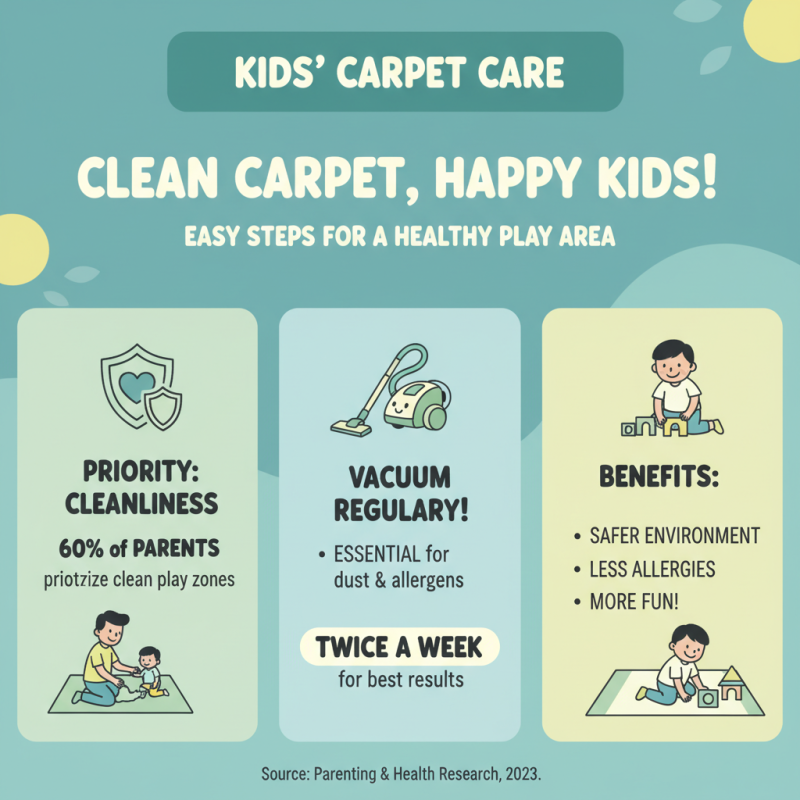
When selecting a kids' carpet, maintenance is crucial. Research shows that 60% of parents prioritize cleanliness in children's play areas. Regular vacuuming is essential. A good vacuum can capture dust and allergens, ensuring a safe environment for your child. Aim to vacuum at least twice a week for optimal results.
Spills are inevitable. Accidental juice or snack crumbs can lead to permanent stains if not addressed swiftly. Blot spills immediately with a clean cloth. Avoid rubbing, as it can push stains deeper. Once a month, consider a deeper clean. Steam cleaning is effective, killing germs while lifting dirt. According to industry reports, carpets cleaned every six months can last up to 50% longer.
Durability in kids' carpets also matters. Look for materials that withstand wear and tear. Some carpets resist stains and fade better than others. Yet, even the best carpets need care. Watch for fraying edges and color fading. Regular maintenance preserves their life and vibrancy. Addressing issues early can save time and money down the line.
Budgeting: How to Choose a Carpet That Fits Your Financial Plan
Budgeting for a kids' carpet can feel overwhelming. Parents often grapple with choices ranging from patterns to textures. A budget helps narrow down options. Think about how much you can spend without stressing your finances. A well-defined budget allows for clearer decision-making.
Before shopping, consider the carpet's longevity. Cheaper carpets may wear out quickly. This can lead to more frequent replacements, which can be costly. Weigh the initial investment against long-term expenses. You may need to sacrifice on style for durability, but practicality often trumps aesthetics.
Also, factor in maintenance costs. Some carpets require special cleaning products. This can add to your overall budget. Look for easy-to-clean materials. They may have a higher price tag but save you time and money later. It’s essential to reflect on what truly matters in your spaces.
Choosing the Best Kids Carpet: Budgeting Considerations