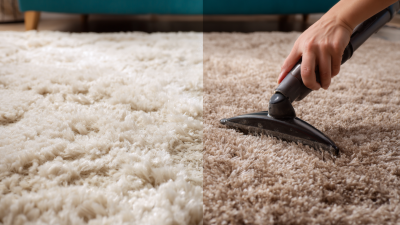
China Top Faux Fur Carpet Manufacturers How to Choose?
Choosing among China’s top Faux Fur Carpet manufacturers requires more than comparing catalog photos and factory prices. A soft surface may hide weak backing, uneven pile, or excessive shedding. Buyers should examine fiber composition, pile density, stitching, color consistency, and edge finishing. Request a physical sample before approving bulk production. Touch it under bright light. Check whether fibers flatten after repeated pressure.
Textile sourcing consultant David Chen offers a practical warning: “The best Faux Fur Carpet is not the softest sample; it is the one that keeps its structure after real use.” His view highlights a common purchasing mistake. Luxury appearance alone does not prove durability. Ask manufacturers about production experience, inspection procedures, material traceability, and acceptable quality limits. Certifications and test reports can support confidence, but they still deserve verification. A document may be current, incomplete, or unrelated to the exact product.
Reliable suppliers should explain minimum order quantities, customization options, packaging methods, lead times, and after-sales handling. Factory videos help, though an independent inspection can reveal more. Look closely at warehouse cleanliness and sample consistency. Small details matter. A loose edge matters.
Cost comparison also needs context. A cheaper carpet may require stronger packaging, more replacements, or additional quality checks. No supplier is perfect, and communication can fail during revisions. Therefore, record every specification in writing, including color references, dimensions, backing materials, and tolerance ranges. The right manufacturer is not simply the largest one. It is the partner that demonstrates repeatable quality, honest communication, and practical control from sample approval to delivery.
What Defines a Reliable Faux Fur Carpet Manufacturer in China
A reliable faux fur carpet manufacturer in China shows its process, not just polished catalog images. During supplier visits, buyers should inspect yarn storage, cutting tables, stitching lines, and packing areas. Clean workspaces do not guarantee quality, but careless handling often leaves visible clues.
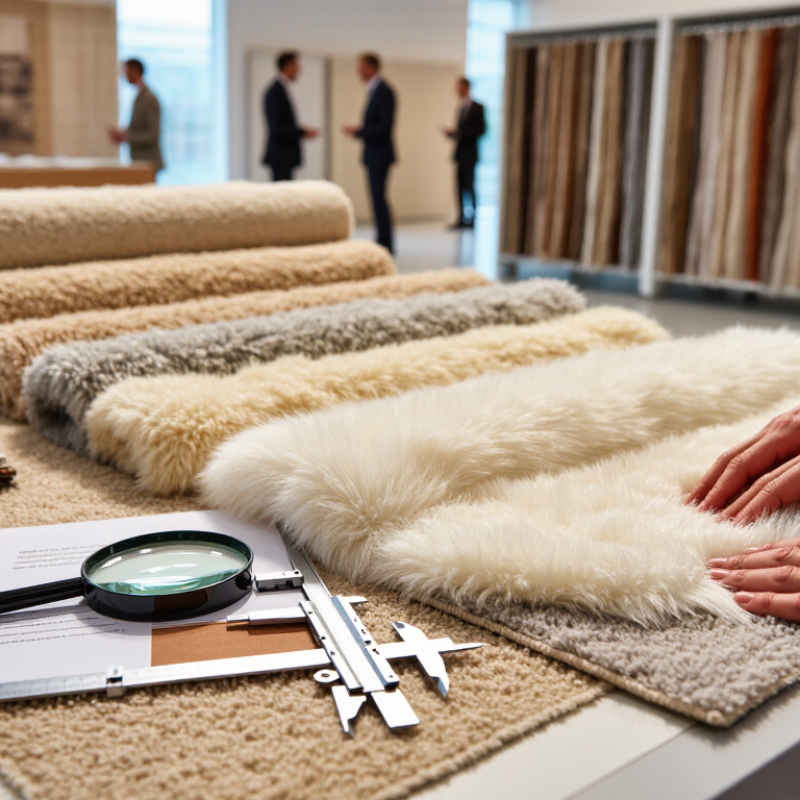
Request a physical sample with the target pile height, backing material, color, and weight. Measure the pile with a ruler and check whether fibers shed after repeated rubbing. A dependable factory should explain its fiber composition, production tolerance, inspection points, and packaging method clearly. Ask for recent test records where relevant, then confirm that the documents match the actual product. Details matter.
Experience also means admitting limitations. One supplier may make excellent small rugs but struggle with large custom sizes. Another may offer stable color matching but need longer production time. These differences deserve honest discussion. A useful manufacturer will identify risks before taking a deposit, provide a written sample approval process, and assign a responsive quality contact. Visit records, batch photos, and pre-shipment inspection reports can strengthen accountability. Still, paperwork is not proof by itself. Keep communication precise, and record every agreed specification.
How to Compare Materials, Craftsmanship, and Product Quality
China Top Faux Fur Carpet Manufacturers: How to Choose?
When comparing faux fur carpet manufacturers in China, start with the fiber, not the color. Polyester fibers are common because they resist moisture and hold dye evenly. Recycled fibers may reduce resource use, but softness and strength can vary. A dense pile usually feels warmer and hides the backing better. Touch alone misleads. Ask for fiber details, pile height, weight, and backing composition. Request samples from different production batches, not only one carefully selected piece.
Craftsmanship appears in small details. Inspect edge stitching, pile direction, and the bond between the fur and backing. Loose threads can reveal rushed finishing. On a well-made carpet, the pile should recover after pressing it with your hand. Run a white cloth across the surface. Excess shedding or color transfer deserves questions. I have seen attractive samples fail after repeated brushing. That mistake costs more than a lower initial price.
Reliable manufacturers should provide inspection records, material specifications, and cleaning guidance. Check color consistency under natural and indoor light. For large orders, test shrinkage after the recommended washing method. A clear tolerance range shows better process control. Do not rely only on certificates; verify whether they match the actual product. No inspection method is perfect. One sample can flatter a weak production line. Keep photos, measurements, and test results before approving production.
How to Evaluate Customization, Minimum Orders, and Production Capacity
Choosing a faux fur carpet manufacturer requires more than comparing catalog prices. Textile Exchange’s Materials Market Report 2024 states that polyester represented about 57% of global fiber production in 2023. Recycled polyester formed only a smaller share, so request fiber content, recycled percentages, and supporting certificates. For customization, ask for a physical sample showing pile height, backing thickness, color accuracy, and edge finishing. Digital images can hide uneven density.
Minimum order quantities should match your sales test, not the factory’s convenience. Ask whether the MOQ applies per design, color, size, or total order. A useful trial may include several small color lots, but some factories charge setup fees for each variation. Get these costs in writing. It is easy to overlook packaging volume and shipping weight.
Production capacity needs measurable evidence. Request monthly output in square meters, current utilization, sample-to-production lead time, and recent on-time delivery records. The 2024 Textile Exchange report also highlights polyester’s dominant position, which means raw-material availability may be strong, but quality can vary widely. Ask for batch testing, backing adhesion results, and a pre-shipment inspection. A factory claiming high capacity should explain its backup lines and peak-season plan. Claims alone are weak evidence. I would also place a small repeat order before committing to a large program; this step costs time, but it can expose color drift, shedding, or inconsistent backing that the first sample never showed.
What to Confirm About Pricing, Samples, Delivery, and After-Sales Service
China Top Faux Fur Carpet Manufacturers: How to Choose?
When comparing Chinese faux fur carpet manufacturers, confirm the full price structure, not only the quoted square-meter rate. Ask whether sampling, edge binding, packaging, mold fees, and export documentation are included. Textile Exchange’s 2024 Materials Market Report states that global fiber production reached 124 million tonnes in 2023, with polyester accounting for 57%. This matters because fiber type, pile density, backing, and recycled content can change both cost and durability. Request a written quotation with currency, Incoterms, minimum order quantity, and payment milestones. A low price can hide weak backing or inconsistent pile height.
Samples should represent mass production. Request a cut sample, color card, backing photo, and a larger piece for shedding and recovery checks. Test it after compression, brushing, and light cleaning. Ask the manufacturer to record pile height, weight, size tolerance, and color standard. Delivery promises need production time, inspection time, and shipping time shown separately. Project delays happen. I learned this after treating “ready to ship” as a complete delivery promise.
Tips:
Confirm a pre-production sample before payment of the balance. Require carton dimensions, loading quantity, and tracking documents. For after-sales service, agree on a claim period, evidence requirements, replacement rules, and response time. The International Trade Centre emphasizes clear product specifications and documentation in cross-border sourcing. Put every promise in the purchase contract, including acceptable defects. Verbal assurance is not enough.