China Top 10 Anti Slip Mat Carpet Manufacturers
China has become a major sourcing base for floor safety products. Its manufacturers serve hotels, bathrooms, gyms, kitchens, and commercial entrances worldwide. Among these products, the Anti Slip Mat Carpet combines surface comfort with practical slip resistance. That balance matters in wet and high-traffic areas.
This guide introduces ten notable Chinese manufacturers and explains what separates them. The evaluation considers factory experience, material selection, production capacity, testing practices, customization, and export service. Common materials include PVC, rubber, polyester, and recycled fibers. Surface textures also vary, from raised dots to ribbed channels that guide water away. A reliable supplier should provide clear dimensions, backing details, cleaning instructions, and sample support. Certifications can help, but they should be checked against the actual product.
No list is flawless. Rankings may change as factories improve equipment, enter new markets, or adjust quality systems. Buyers should still inspect samples carefully. Look at edge finishing, backing adhesion, odor, color stability, and recovery after repeated pressure. A mat that feels secure in a showroom may perform differently on a damp tile floor. Practical testing remains essential.
The featured companies represent different strengths, including mass production, custom branding, hospitality projects, and environmentally considerate materials. Their experience can help importers compare realistic options instead of relying on attractive catalog images. Product performance depends on design, installation, maintenance, and site conditions. This article offers a professional starting point, not a substitute for independent verification. Clear communication often prevents expensive mistakes.
What Defines a Reliable Anti-Slip Mat Carpet Manufacturer in China
A reliable anti-slip mat carpet manufacturer in China proves performance beyond a product catalogue. The World Health Organization reports about 684,000 fatal falls worldwide each year. Therefore, responsible suppliers should provide measured slip resistance, not vague claims. Ask for test conditions, surface type, moisture level, and sample age. Results without this context can mislead buyers.
Manufacturing discipline matters too.
The 2023 ISO Survey records more than one million ISO 9001 certificates worldwide, but certification alone does not prove mat quality. A dependable factory should connect documented procedures with physical checks. These include backing adhesion, edge curling, pile density, dimensional tolerance, and accelerated aging. Production samples should match approved samples. They often do not.
Look for batch records and traceable raw materials. Recycled rubber content, plasticizers, dyes, and adhesives can affect odor, flexibility, and floor contact. Experienced factories test incoming materials before weaving or molding. They also inspect rolls under bright lighting, where loose fibers and uneven backing become visible. Small defects matter.
A supplier should explain its test limits honestly. “Waterproof” is not the same as slip-resistant. “Custom size” may still have tolerance limits. Factory audits should review worker training, calibration records, complaint handling, and corrective actions. The best manufacturer is not flawless. It notices weaknesses early, reports them clearly, and improves the process before shipment.
How to Evaluate China’s Top 10 Anti-Slip Mat Carpet Manufacturers
Choosing China’s top ten anti-slip mat carpet manufacturers requires more than comparing online catalogs. Treat the list as a shortlist, not a guaranteed ranking. Check factory registration, production history, and export records. Request recent photos of cutting, backing, and packaging lines. A dependable supplier should explain material composition, thickness tolerance, and slip-resistance performance clearly.
Order samples before discussing large quantities. Test them on ceramic tile, wet concrete, and smooth wood. Observe curling, odor, edge separation, and movement after repeated foot traffic. Ask for laboratory reports and verify the testing method. Also review batch inspection records, packaging details, lead times, and corrective-action procedures. A low price can become expensive when cartons arrive with inconsistent dimensions.
Tips: Compare at least three samples under identical conditions. Ask who performs the final inspection. Confirm whether recycled materials affect strength or odor. Visit the factory, if practical, or request a live video audit. I once trusted attractive product photos too quickly; the backing looked firm but shifted on wet tile. That mistake changed my evaluation process. Supplier communication matters as much as machinery. Clear answers, traceable documents, and realistic delivery promises reveal operational maturity. Still, no audit removes every risk. Test periodically after approval, because materials and subcontractors can change.
China Top 10 Anti-Slip Mat Carpet Manufacturers: How to Evaluate Them
Recommended weighted evaluation criteria for comparing manufacturers without using company or brand data.
The chart uses a 100-point procurement evaluation model. Slip resistance and product safety receive the highest weight because anti-slip performance is the primary function of these mats. Material durability, quality consistency, customization, testing documentation, production capacity, delivery reliability, sustainability, and after-sales support are also included for a balanced manufacturer assessment.
Product Categories, Customization Options, and Industry Applications
China Top 10 Anti Slip Mat Carpet Manufacturers
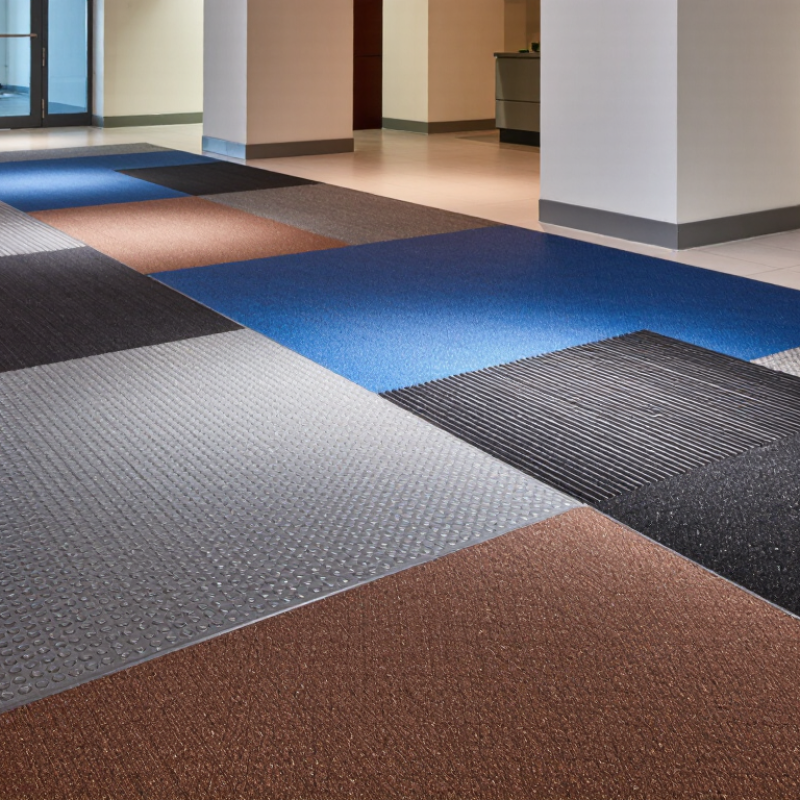
China’s anti-slip mat carpet suppliers commonly offer several product categories for different working conditions. PVC mats suit kitchens, corridors, and light commercial areas because they are flexible and easy to clean. Rubber mats provide stronger grip and better wear resistance for factories, workshops, and entrances. TPE options offer low-odor performance and easier recycling considerations. Carpet-top mats combine surface comfort with a waterproof or rubber backing. Drainage mats are useful where water, oil, or mud may collect.
Customization usually covers length, width, thickness, edge design, backing texture, and surface pattern. Buyers can request roll goods or cut pieces for irregular spaces. Some manufacturers also adjust color, pile height, packaging, and printed markings.
These details affect cleaning time and replacement costs. A thicker mat is not always better. It may create a trip edge near doors.
Industry applications require practical evaluation, not attractive samples alone.
Hotels often need quiet carpet surfaces and stable backing. Retail stores may prefer low-profile mats for carts and frequent foot traffic. Workshops need oil-resistant materials, beveled edges, and easy lifting. Healthcare facilities may prioritize sealed surfaces and simple disinfection. Request material specifications, slip-resistance test data, dimensional tolerances, and sample performance records. Test the mat on the actual floor. A product can perform well in a laboratory and disappoint beside a wet entrance. Suppliers should explain limitations honestly, including odor, fading, curling, and cleaning requirements.
Quality Standards, Export Capacity, and Supplier Selection Factors
China Top 10 Anti Slip Mat Carpet Manufacturers
Choosing an anti-slip mat carpet manufacturer requires more than comparing prices. Reliable suppliers should provide clear material specifications, backing details, and recent test reports. Check tests relevant to the destination market, such as applicable EN or ASTM slip-resistance methods. ISO 9001 certification can support process consistency, but it does not replace product inspection. Ask for samples and measure edge curling, backing adhesion, surface wear, and odor after washing. Small details matter.
Export capacity also affects delivery reliability. Review monthly production output, standard lead times, packaging methods, and container-loading records. A capable factory should explain how it protects rolls or folded mats from moisture and deformation. Confirm carton dimensions, pallet conditions, labeling accuracy, and document support before placing a large order. Communication quality is evidence, too. Slow or vague answers may become costly later.
Tips: Request three production samples from different batches. Test them on tile, wood, and damp concrete. Ask for batch numbers, inspection photos, and a corrective-action process. No supplier is perfect. Even a careful audit can miss inconsistent backing thickness. Recheck critical features before shipment, especially when the design or raw material changes. A lower quotation may hide weaker packaging, shorter testing, or higher replacement risk. Supplier selection should balance verified quality, export experience, production control, and practical after-sales response.