Leave Your Message

7 Best Carpet For Washroom Options for Global Buyers

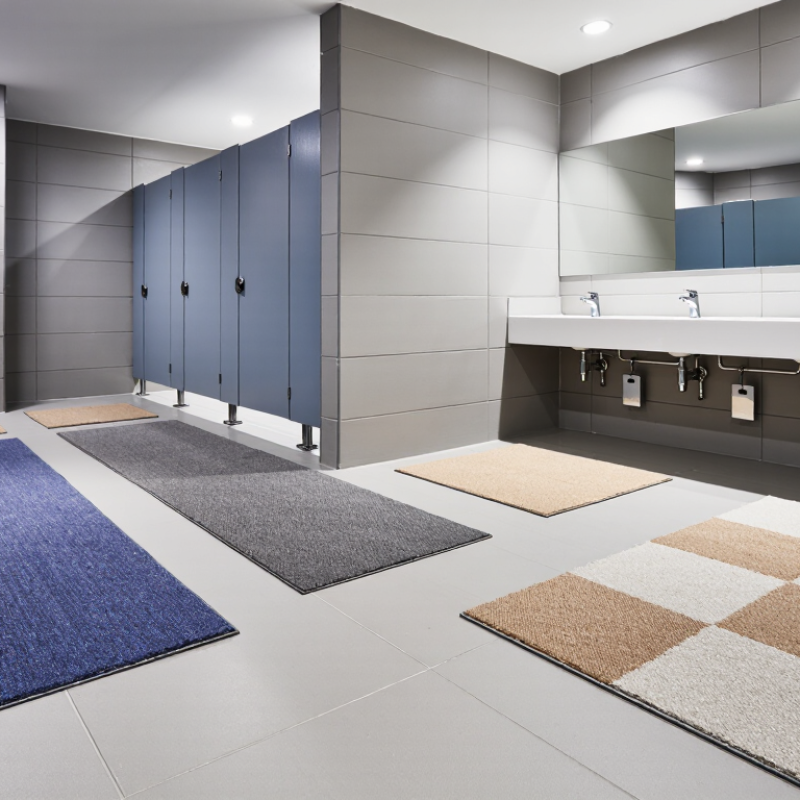
Choosing the right Carpet For Washroom spaces requires more than attractive colors and soft texture. Humidity, splashes, cleaning chemicals, drainage, and foot traffic can quickly expose weak materials. A carpet that feels comfortable in a hotel restroom may fail in a busy airport washroom. No single option suits every market.

Industry reports support this careful approach. Grand View Research identifies continued global growth in carpets and rugs, driven by commercial renovation and interior comfort. Its market analysis also highlights demand for durable, sustainable, and low-maintenance products. The U.S. Environmental Protection Agency stresses moisture control as a central measure for reducing mold risks in indoor environments. These findings matter because washroom flooring faces repeated wetting, not occasional spills.

This guide compares seven practical carpet options for global buyers. It considers polypropylene, nylon, solution-dyed fibers, modular carpet tiles, and other moisture-conscious designs. Key checks include pile density, backing construction, slip resistance, drying speed, stain protection, and cleaning access. Look for verified product testing, clear installation instructions, and supplier documentation. The Carpet and Rug Institute’s Green Label Plus program can also help buyers assess lower-emission products.

Still, performance claims need careful review. “Water-resistant” does not mean waterproof. A thick pile may feel luxurious, yet it can retain moisture longer. Local building rules and ventilation conditions also change the buying decision. The best choice is usually the most balanced one, not the most expensive. Expect compromises. A reliable specification should survive real cleaning routines, wet shoes, rolling carts, and imperfect maintenance.
7 Best Carpet For Washroom Options for Global Buyers

Washroom Carpet Selection Criteria: Moisture, Slip, Fiber, and Ventilation Data

7 Best Carpet For Washroom Options for Global Buyers

Washroom carpet must resist moisture before it impresses visually. The U.S. Environmental Protection Agency recommends indoor relative humidity between 30% and 50%. Higher levels increase condensation and mould concerns. The World Health Organization’s Housing and Health Guidelines also link damp indoor conditions with respiratory risks. Choose seven practical options: solution-dyed nylon, polypropylene, PET, wool, olefin tile, recycled PET, and modular carpet with waterproof backing. Nylon offers strong recovery. Polypropylene tolerates many cleaning chemicals. Wool feels warm, but it needs careful drying. No fiber is perfect.

Slip control depends on the whole floor system. A soft surface can still move over wet tiles. Ask suppliers for wet slip-resistance test results, backing adhesion data, and cleaning-cycle performance. Request testing against recognized methods, such as ANSI A326.3 or local equivalents, where applicable. Carpet tiles simplify replacement near basins and shower entrances. Yet, poorly sealed edges may trap water underneath. I would inspect those edges twice.

Tips: Keep carpet at least outside direct splash zones. Use low-pile construction, dense backing, and rounded transitions. Install an exhaust system that visibly clears mirror fog. Measure humidity for seven days, not one morning. Report ventilation rates in L/s or CFM, and compare them with local building rules. Select fibers only after reviewing moisture, slip, fiber-shedding, and drying data. A sample test beside the washroom door often reveals more than a catalogue.
Seven Carpet Types Compared by EN 1307 Classes 21–23 and 31–33

7 Best Carpet For Washroom Options for Global Buyers

Seven Carpet Types Compared by EN 1307 Classes 21–23 and 31–33

EN 1307 separates carpets by use intensity, not waterproof performance. Classes 21–23 suit domestic areas, while classes 31–33 cover commercial traffic. A washroom carpet should stay outside direct shower spray. Moisture remains the weak point.

Seven practical options fit different zones. Loop-pile carpet in Class 21 works beside a guest basin. Dense cut-pile carpet in Class 22 feels softer under bare feet. Cut-and-loop carpet in Class 23 offers texture and hides small marks.

Carpet tiles in Class 31 simplify replacement near busy entrances. Needle-punch carpet in Class 32 handles damp footwear and heavy circulation. Wool carpet in Class 23 provides warmth, but it needs careful drying. Solution-dyed synthetic carpet in Class 33 resists colour fading and frequent cleaning.

These ratings describe durability, not stain-proofing.

Grand View Research valued the global carpets and rugs market at approximately US$72.39 billion in 2023, showing strong demand for varied flooring specifications. The European Commission’s 2023 Product Environmental Footprint Category Rules assess carpets across their full life cycle, including materials, manufacturing, use, and disposal.

Buyers should request EN 1307 test evidence, pile density, backing details, and moisture-management instructions. I would avoid latex-heavy backing in poorly ventilated washrooms. The standard alone cannot predict mould risk. This is where product judgment becomes imperfect.

A beautiful Class 33 carpet can still fail beside a leaking toilet.

Nylon, Polyester, Polypropylene, Wool, and PVC-Backed Carpet Performance

Choosing carpet for a washroom starts with moisture, not color. Nylon handles repeated foot traffic and keeps its shape near busy sinks. It dries reasonably quickly when ventilation is strong. Yet wet nylon can still hold odor if the backing stays damp. Polyester offers a soft texture and useful stain resistance. It suits low to moderate traffic, especially beside a dry vanity. I have found its fibers can flatten sooner where people stand every morning. That detail is easy to miss.

Polypropylene resists many common water-based stains and feels practical for family washrooms. Its lower resilience may show compression beside a toilet or basin. Wool feels warm under bare feet and manages humidity better than many synthetics. However, it needs careful drying and may not forgive repeated soaking. PVC-backed carpet adds a protective moisture barrier, but seams and edges still need inspection. A backing is not a waterproof floor.

For global buyers, check pile height, backing adhesion, drainage, and cleaning instructions. A short, dense pile is easier to vacuum and less likely to trap hair. Use a moisture meter when possible, especially over concrete. Ask for abrasion and colorfastness test data, not vague performance claims. I once preferred a softer sample, then rejected it after its backing curled near a heated towel rail. Small tests matter. Keep exhaust fans running after showers. Even the best fiber fails in a persistently wet room.

7 Best Carpet for Washroom Options for Global Buyers – Nylon, Polyester, Polypropylene, Wool, and PVC-Backed Carpet Performance
Option Typical Fiber / Backing Moisture Performance Drying Speed Stain Resistance Wear Resistance Mold and Mildew Considerations Comfort and Appearance Typical Best Use Key Limitation
1. Nylon Carpet Tile Solution-dyed or space-dyed nylon face fiber with modular carpet-tile construction Low inherent absorbency, but the face and seams still require prompt drying after water exposure Fast to moderate, depending on pile density and ventilation ★★★★★
Good resistance to many everyday stains; topical treatment may improve performance
★★★★★
Excellent resilience and recovery from foot traffic
Does not support mold growth by itself, but trapped moisture beneath tiles or in the subfloor can create a risk Comfortable underfoot with strong color and pattern flexibility Commercial washroom entrances, hotel facilities, office buildings, and high-traffic areas Usually costs more than polypropylene and can absorb some moisture if untreated
2. Polyester Carpet Tile Polyester face fiber, commonly manufactured as modular tiles Low moisture absorption compared with many natural fibers; moisture can still remain in the backing Fast to moderate with good airflow ★★★★★
Strong resistance to many water-based stains and broad color availability
★★★☆☆
Suitable for light to medium traffic; less resilient than nylon
Requires complete drying of the carpet, adhesive, and subfloor after leaks or cleaning Soft touch, bright colors, and good design versatility Low to medium traffic washrooms, hospitality areas, and decorative zones near sinks Fibers may crush or show traffic lanes sooner in heavily used washrooms
3. Polypropylene Carpet Olefin/polypropylene face fiber, often tufted into a synthetic backing Very low water absorption; suitable where occasional splashes are expected Fast, provided the backing and floor beneath are also ventilated ★★★★☆
Good resistance to many water-based stains and cleaning chemicals
★★★☆☆
Acceptable for light to medium traffic; lower resilience than nylon
Fiber is moisture resistant, but dirt, organic residue, and damp backing can still support microbial growth Practical, lightweight, and available in many economical designs Light-use washrooms, changing areas, and zones where cost and moisture resistance are priorities Can flatten under heavy traffic and has lower resistance to some oily stains and heat
4. Wool Carpet Woven or tufted wool face fiber with textile or synthetic backing Wool is hygroscopic and can absorb and release moisture; it is not inherently waterproof Slow to moderate, especially in dense piles or poorly ventilated rooms ★★★☆☆
Natural soil resistance, but liquid spills should be treated promptly
★★★★☆
Very good resilience and long-term appearance when properly maintained
Must be kept dry and cleaned correctly; persistent dampness can damage fibers and backing Warm, luxurious, quiet, and naturally flame-resistant compared with many synthetic fibers Premium hotel or residential washrooms with strong ventilation and controlled splash exposure Higher price, slower drying, and greater sensitivity to prolonged dampness and unsuitable chemicals
5. Nylon Carpet with PVC Backing Nylon face fiber laminated or bonded to a water-resistant PVC backing Very good splash management at the backing; perimeter seams and installation joints remain critical Moderate; PVC can restrict evaporation from the underside ★★★★★
Strong performance when the fiber is solution-dyed or stain-treated
★★★★★
Well suited to heavy foot traffic and frequent cleaning
PVC backing helps limit liquid penetration, but moisture trapped below the carpet must be removed Durable, comfortable, and available in commercial patterns and tile formats Busy commercial washrooms, corridors outside washrooms, and areas exposed to frequent splashing Requires careful seam detailing; PVC may become less flexible in low temperatures
6. Polyester Carpet with PVC Backing Polyester face fiber combined with a water-resistant PVC secondary backing Good resistance to surface splash and limited accidental spills Moderate, because the PVC layer can slow underside drying ★★★★★
Good stain resistance and strong color selection
★★★☆☆
Best for light to medium traffic rather than heavily trafficked entrances
Backing reduces water transfer but does not eliminate the need for drying and routine cleaning Soft appearance with a balance of decorative flexibility and moisture protection Hotel, residential, and moderate-use washrooms where aesthetics are important Less resilient than nylon and may retain compression marks under heavy use
7. Polypropylene Carpet with PVC Backing Polypropylene face fiber with PVC backing or a PVC-backed carpet tile construction Very good resistance to surface moisture and occasional splashes Moderate; installation over a dry, level subfloor is essential ★★★★☆
Good resistance to many water-based stains and routine cleaning agents
★★★☆☆
Appropriate for light to medium traffic and budget-sensitive projects
Moisture-resistant materials still require cleaning and complete drying to prevent odor or microbial issues Economical, practical, and available in simple commercial patterns Low-cost washroom projects, changing rooms, and splash-prone areas with moderate traffic Lower crush recovery and lower resistance to heat and oily stains than nylon options

Performance ratings are comparative guidance based on common fiber and backing characteristics. Actual results depend on pile construction, density, dye system, backing formulation, seam quality, ventilation, cleaning chemicals, installation conditions, and the manufacturer’s tested specifications.

Evaluating Water Absorption, Drying Time, VOCs, and Slip Resistance Standards

Choosing the best carpet for a washroom requires more than a soft texture. Water absorption should be measured by weight gain after soaking, not by touch alone. A dense polypropylene or solution-dyed synthetic pile may absorb less water than natural fibers. However, the backing can retain moisture underneath. Check both layers. In practical inspections, a mat that feels dry on top can still smell damp after several hours.

Drying time matters in busy hotels, offices, and family bathrooms. Test samples after a measured spill, then record their weight at regular intervals. Airflow, room temperature, and underlay material can change the result. Allow at least 24 hours for comparison. That sounds excessive, but rushed testing gives unreliable conclusions. I have found that raised textures dry faster than flat, tightly packed surfaces, although they may collect more hair and dust.

VOCs also deserve careful attention, especially in small, poorly ventilated washrooms. Request laboratory data based on recognized indoor-air methods, such as ISO 16000 or applicable regional requirements. Do not rely only on “low odor” claims. For slip resistance, review wet-condition testing, the stated test method, and its limits. EN 13893 or local wet-pendulum methods may be relevant, depending on the floor system. A carpet can improve comfort, yet its curled edge or wet backing can create a hazard. Secure edges firmly, inspect them weekly, and replace damaged sections promptly.

Global Buyer Checklist: ASTM, ISO, CE, Fire Ratings, Maintenance, and Cost

For washrooms, seven practical carpet options include solution-dyed nylon, polypropylene, wool blends, recycled PET, rubber-backed carpet tiles, quick-dry loop pile, and modular moisture-resistant squares. Each performs differently near sinks, shower entrances, and changing areas. Nylon usually offers strong wear resistance, while polypropylene handles moisture well and costs less. Wool feels comfortable, but it needs stricter moisture control. Carpet tiles simplify repairs when one wet section becomes damaged.

Global buyers should request test reports, not only marketing claims. ASTM documents may confirm slip resistance, abrasion, water absorption, or fire performance for the intended market. ISO methods can support consistent quality comparisons across suppliers. CE marking applies only when relevant European requirements cover the product; it should never be assumed. Check the exact fire classification required by the building authority. A sample may pass one test but fail another.

Ask for fiber content, backing details, dye stability, odor results, and installation instructions. Confirm whether adhesive, underlay, and edging change the fire rating. Maintenance should include daily water removal, weekly low-moisture cleaning, and prompt treatment of soap residue. I have seen buyers choose the lowest price, then replace curled edges within months. That decision was not economical. Compare total cost, including freight, installation, cleaning labor, replacement tiles, and disposal. Small sample tests help, although they cannot fully reproduce constant humidity, poor ventilation, or heavy public traffic.