What Is the Best Rug Wool for Global Buyers?
Choosing the best Rug Wool for global buyers is not a simple matter of selecting the softest fiber. A showroom sample may feel luxurious, yet perform poorly under heavy foot traffic. In contrast, a stronger wool can look slightly coarser but survive years of daily use. This difference matters in hotels, family homes, galleries, and outdoor-entry spaces.
Peter Ackroyd, a former International Wool Textile Organisation leader, has stated, “Wool is a natural, renewable, and biodegradable fibre.” That quality gives Rug Wool strong environmental appeal. However, responsible buying requires more than a sustainability claim. Buyers should examine the wool’s origin, micron count, staple length, tensile strength, scouring quality, dye response, and traceability records. These details affect softness, shedding, color stability, odor, and long-term shape retention.
New Zealand wool often offers reliable strength and consistent fiber quality. British wool may provide character, resilience, and a more textured appearance. Himalayan and Central Asian wools can bring distinctive hand-feel and regional identity. Still, regional reputation cannot replace supplier testing. Weather, animal nutrition, harvesting methods, and processing conditions can change the final material.
There is no universal winner.
This guide compares Rug Wool by practical application, not marketing language alone. It considers dense pile rugs, hand-knotted designs, flatweaves, children’s rooms, and commercial interiors. Some conclusions may remain imperfect because wool quality varies between batches. That uncertainty deserves attention. Global buyers should request test reports, physical samples, production photographs, and clear documentation before placing large orders. The best choice is therefore the wool that matches performance needs, budget, design intent, and verified supply-chain standards.
What Makes a Wool Type Suitable for Rugs?
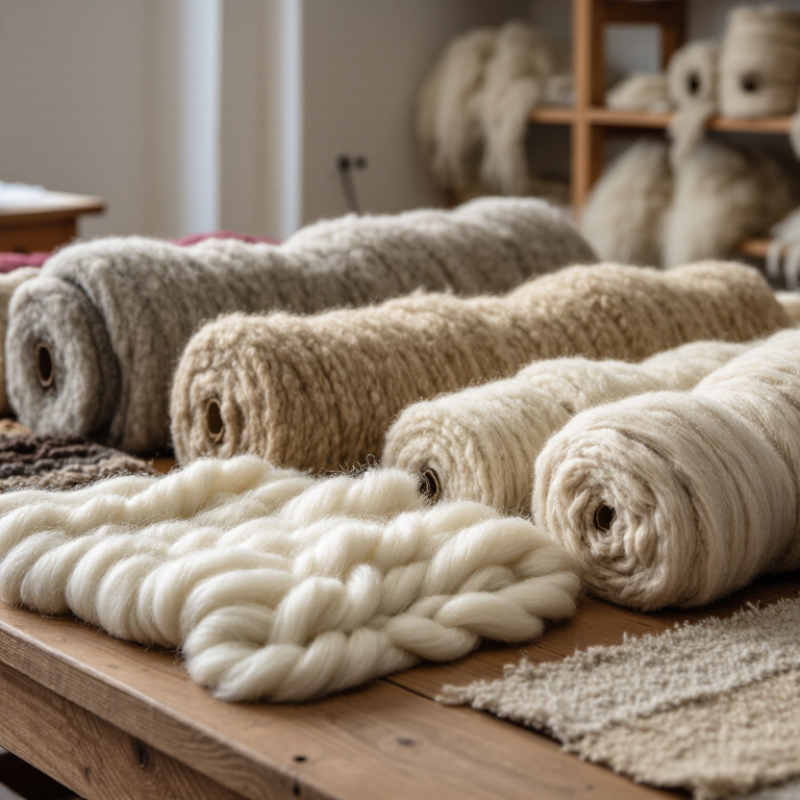
A wool type suitable for rugs must balance softness, strength, and recovery. In purchasing inspections, I look closely at fiber diameter, staple length, and natural crimp. These details affect how a rug feels underfoot and how it responds to daily traffic.
Fine wool creates a smooth, comfortable surface for bedrooms and quiet living rooms. However, very fine fibers may flatten faster in busy hallways. Medium-grade wool often provides a more practical balance. Its stronger fibers resist crushing, while natural crimp helps the pile regain its shape. Longer staples can also reduce shedding and improve yarn stability. Still, fiber quality varies between harvests and suppliers.
Color performance matters for global buyers. Wool should accept dye evenly without losing its natural texture. I also check moisture content, yarn twist, backing compatibility, and edge finishing before approval. A rug may use excellent wool but fail because of weak construction. That lesson is easy to overlook.
Climate changes the decision. Dense wool works well in cool interiors, while lighter constructions feel more comfortable in warmer regions. Natural lanolin can improve softness, but some users may notice its scent. Certifications, traceability, and test reports support reliable sourcing, yet paperwork cannot replace a physical sample. I once trusted a specification sheet too quickly. The finished rug felt rougher than expected. Small testing mistakes can become expensive.
How Major Rug Wool Types Compare in Quality and Performance
What Is the Best Rug Wool for Global Buyers?
Rug wool quality depends on fiber diameter, staple length, crimp, and processing. Merino wool feels exceptionally soft underfoot. Its fine fibers suit bedrooms and low-traffic sitting areas. However, softness can reduce resistance to heavy furniture and repeated friction. New Zealand wool usually offers stronger resilience. Its springy crimp helps rugs recover after chairs and tables move. It often works well in busy homes and hospitality spaces.
British wool is generally firm, durable, and naturally textured. It can create a slightly rustic surface with useful soil resistance. Argentine wool often provides a practical balance between softness, strength, and cost. Highland wool from Central Asia may deliver long fibers, warmth, and a distinctive natural luster. Yet supply consistency can vary. Origin alone does not guarantee performance. Better indicators include verified fiber testing, clean sorting, stable dye absorption, and careful spinning.
I once focused too much on softness during a rug inspection. The sample felt luxurious, but its short fibers showed wear quickly near the doorway. That mistake changed my buying checklist. For global buyers, ask about micron range, staple length, washing method, and pile density. Request a physical sample when possible. Rub it repeatedly. Bend the backing. Check whether loose fibers shed excessively. No wool type wins every application. A soft bedroom rug and a durable hallway rug need different choices. Cost also deserves scrutiny, because cheaper wool may require earlier replacement.
How Climate and Rug Usage Affect Wool Selection
What Is the Best Rug Wool for Global Buyers?
How Climate and Rug Usage Affect Wool Selection
Choosing rug wool starts with the room, not the sales label. Climate changes how fibers feel, dry, and perform over time. In humid coastal homes, wool with good natural resilience can help rugs recover from daily pressure. However, ventilation still matters. Damp rooms may encourage odors and slow drying after cleaning.
Dry climates create different concerns. Low humidity can make some rugs feel brittle, especially when exposed to strong sunlight near large windows. Medium-grade wool often offers a practical balance between softness and durability. Fine wool feels luxurious, but it may show wear sooner in busy hallways. Coarser wool can resist heavy use, though it may feel less comfortable under bare feet.
Usage should guide the final choice. A living room rug needs softness, stain tolerance, and enough strength for repeated foot traffic. Dining areas benefit from resilient fibers and a surface that releases crumbs easily. In entryways, tightly spun wool usually handles grit better than loose, delicate pile. Vacuuming technique also matters. Aggressive settings can damage even excellent wool.
No wool performs perfectly everywhere. I have seen beautiful, soft rugs lose their charm when placed beside sunny doors or muddy entrances. Buyers should check fiber quality, pile density, dye stability, and care instructions before ordering. Local climate data and real household habits deserve equal attention. a better choice often comes from practical compromise.
How to Choose the Best Rug Wool for Different Markets
Choosing rug wool for global markets starts with use, not appearance. Fine wool suits bedrooms and low-traffic hospitality areas. Coarser fibers often handle crushing better in hallways, shops, and family rooms. Staple length matters too. Longer fibers can reduce shedding when spun and woven well. Test it first. Rub a sample against dark cotton cloth, then inspect loose fibers, odor, and color stability.
Climate changes the decision. In humid coastal markets, buyers should request moisture testing and clear drying guidance. Wool can buffer humidity, but it is not waterproof. In dry regions, a tighter pile may simplify routine vacuuming, though dust still collects. For cold markets, thicker pile feels warmer underfoot. For hot interiors, a lower pile may clean faster and feel less heavy. Check color performance under strong local sunlight, especially with deep reds and dark neutrals.
Price-sensitive markets may accept blended wool when fiber percentages are documented. The surface should also wear evenly. Premium buyers may prioritize hand feel, natural variation, and repairability. Ask for micron range, staple length, pile density, dye method, backing composition, and care limits. Independent lab reports help, but a small field trial is better. I once underestimated furniture pressure on a dense sample; chair marks remained after four weeks. That mistake changed my buying checklist. A sample placed under real furniture reveals more than a showroom touch.