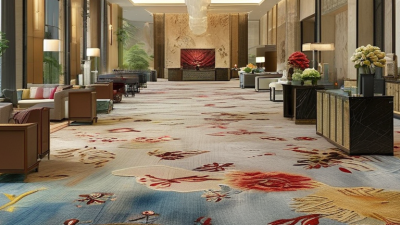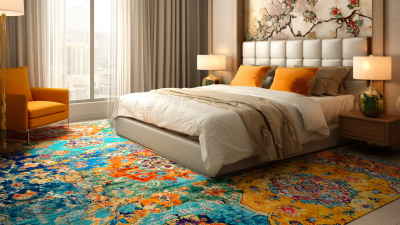
Hotel Carpet is more than a decorative finish: it shapes the first impression, softens footsteps, and faces constant rolling luggage and daily cleaning. For global buyers, choosing a supplier means balancing appearance with durability, maintenance, customization, and dependable delivery.
UN Tourism’s World Tourism Barometer, published in January 2025, estimated 1.4 billion international tourist arrivals in 2024, about 99% of 2019 levels. That recovery supports renewed hotel activity, though it does not guarantee uniform demand for new flooring. Grand View Research valued the global carpet and rug market at USD 51.93 billion in 2023 and projected a 4.2% compound annual growth rate from 2024 to 2030. These figures provide market context, not a hotel-carpet sales forecast.
Details matter. This guide introduces ten Chinese manufacturers for international buyers, with attention to product range, customization, production capability, export experience, and documented quality controls. Compare fiber, backing, dye consistency, seam behavior, cleaning needs, sample lead times, and replacement availability—not price alone. Ask for current test reports, and confirm project requirements with local teams; fire and indoor-air standards vary across markets. A cut-pile swatch can look rich in a showroom, then flatten in a busy lift lobby. No list removes that risk. Treat supplier claims as starting points, request relevant project references, and test full-size samples under the lighting and cleaning routine the property will actually use.
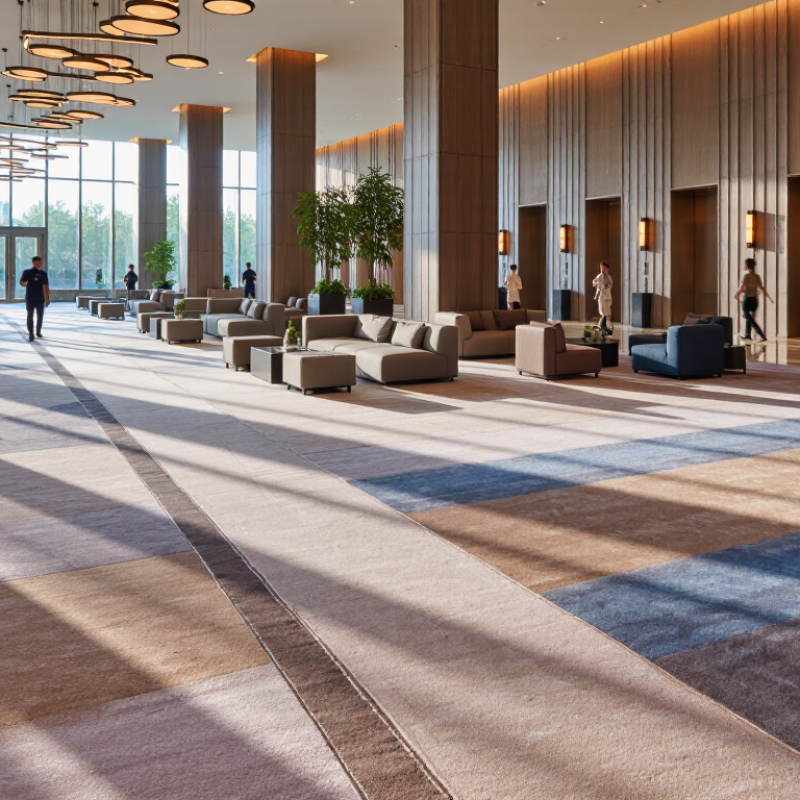
China’s hotel carpet manufacturing industry serves projects ranging from compact business hotels to large resorts. Production capabilities vary: some factories focus on machine-tufted carpets, while others offer woven construction and custom patterns. Buyers should ask how yarn type, pile height, backing, and dyeing methods affect the intended space. A dense, low-pile surface may suit busy corridors; a softer texture can work better in guest rooms. Small details matter.
Factory visits and sample reviews can reveal more than a quotation. Check whether color samples match under warm hotel lighting, and inspect the carpet’s edges and backing. Ask for documented test results relevant to wear, colorfastness, and cleaning. Confirm production capacity, inspection steps, packaging, and realistic shipping schedules. These details help buyers compare suppliers on more than price. Yet even careful checks cannot remove every risk; specifications sometimes change between sample approval and bulk production. Written approvals help, but they are not magic.
Tips: Request a sample made with the proposed materials, not just a similar design. Share room dimensions, traffic levels, and cleaning routines early. Ask who handles quality checks before shipment. Leave time for revisions; rushed choices can show in the finished floor.
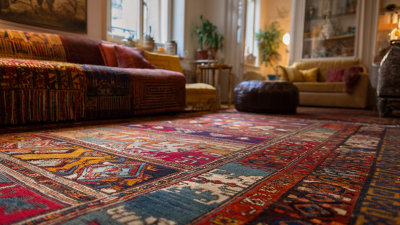
Hotel carpet design begins with the building, not a color chart. Designers map guest routes, service corridors, lift lobbies, and room entrances. They note sunlight, cleaning routines, trolley traffic, and the sound of rolling luggage. Small details matter.
A design team matches pattern, pile height, fiber, and backing to each zone. Low-pile construction can help carts move smoothly, while textured patterns may disguise everyday footprints. Sample boards are checked under warm lobby lights and cooler daylight. Colors can shift. A tile that looks calm in a studio may feel too bold across a long corridor. The team adjusts scale and contrast, though not every decision is perfect.
Production turns the approved design into yarn and carpet. Tufting or weaving forms the surface; dyeing sets the color, and finishing controls texture and edge stability. Manufacturers inspect dimensions, shade consistency, seams, and backing before packing. Test pieces can reveal issues early, but installation still needs careful planning. Rolls or tiles must arrive in sequence, and installers should follow the layout map. A rushed handover can undo good design. Hotel teams should review cleaning methods with suppliers, since harsh routines may shorten a carpet’s useful life.
A practical overview of ten design, production, and procurement factors buyers can use when evaluating hotel carpet suppliers. Specifications vary by project, construction, and destination market.
| No. | Design or Production Factor | Common Options and Production Details | What Global Buyers Should Check |
|---|---|---|---|
| 1 | Project brief and zoning | Carpet requirements are developed around the intended space, such as guest rooms, corridors, meeting rooms, restaurants, or reception areas. | Provide room schedules, traffic expectations, cleaning routines, design references, and local building requirements before requesting a quotation. |
| 2 | Carpet construction | Common commercial constructions include tufted carpet, woven carpet, and modular carpet tile. Construction affects pattern possibilities, installation, maintenance, and replacement. | Compare construction samples against the project’s appearance, service conditions, installation plan, and repair strategy. |
| 3 | Fiber selection | Carpet fibers may include nylon, wool, polypropylene, polyester, or fiber blends. Their performance depends on the fiber type, yarn construction, carpet construction, and maintenance. | Request the fiber composition and relevant test information; assess stain care, appearance retention, comfort, and cleaning requirements for each area. |
| 4 | Pile and surface design | Cut pile, loop pile, and combinations such as cut-and-loop can create different textures and pattern effects. Pile height and density are specified as part of the product construction. | Review full-size samples where possible and confirm construction details on the product specification, rather than relying on appearance alone. |
| 5 | Pattern and color development | Patterns can be developed for the selected construction using methods such as yarn dyeing, piece dyeing, or printing, depending on the product and design. | Approve physical color and pattern samples, confirm pattern repeat and direction, and clarify acceptable production tolerances before bulk manufacturing. |
| 6 | Backing and dimensional stability | Carpet backings vary by product and can include different secondary backing systems. Backing selection influences handling, installation, and product performance. | Confirm the specified backing, installation method, substrate preparation, and compatibility with the project’s adhesive or installation system. |
| 7 | Performance and safety testing | Performance requirements can include wear, appearance retention, colorfastness, and reaction-to-fire properties. Test methods and classifications differ across markets and project specifications. | Request reports for the exact product construction and check that test methods and results meet the destination country’s regulations and project requirements. |
| 8 | Sampling and approval | The development process typically uses design artwork, color references, sample pieces, and approved specifications before production quantities are made. | Keep a signed or otherwise clearly identified approval sample and written specification as the reference for production and inspection. |
| 9 | Manufacturing and quality control | Depending on the product, manufacturing may include yarn preparation, dyeing, tufting or weaving, finishing, inspection, and packing. | Agree on inspection criteria, roll or tile identification, batch tracking, packaging protection, and how defects or color variation will be handled. |
| 10 | Installation and lifecycle planning | Installation planning accounts for site measurements, layout, seams or tile direction, transitions, access, and coordination with other trades. Routine care depends on the carpet and site conditions. | Confirm quantities, cutting plans, delivery sequence, installation guidance, maintenance instructions, and whether spare material is needed for future repairs. |
Note: This table summarizes general carpet design and procurement considerations; it does not rank or identify individual manufacturers. Final product selection should be based on project specifications, verified test documentation, and applicable local requirements.
International buyers need more than an attractive carpet sample. They need clear specifications and dependable support across distance and time zones. Ask for fiber content, pile height, total weight, backing type, and dimensional tolerances in writing. These details help teams compare products fairly and plan installation. Small differences matter. A sample may look dense under showroom lights but feel different across a full room. Request a larger cutting when color, texture, or pattern matching is critical.
A capable manufacturer should provide current test reports that match the proposed construction, not just a generic product sheet. Confirm which performance standards apply to the project and destination market, including fire performance, wear resistance, and indoor emissions where relevant. Check report dates, product references, and testing scope. Ask about production lead times, sample approval, export packing, and how defects are handled. Clear answers are useful. Vague promises are not. Some details may still change during production, so agree on written tolerances and approval steps before ordering.
Tips: Send a room plan, traffic expectations, and installation schedule with your inquiry. Ask for packing photos and shipment updates. Keep one approved sample for comparison; it may not capture every batch variation.
China’s hotel-carpet sector spans mills, specialist weavers, and project suppliers. Grand View Research valued the global carpet and rugs market at about US$51.7 billion in 2023. That figure covers more than hotels, so it should not be treated as a measure of hotel-carpet demand. The ten profiles below describe supplier capabilities, not verified company rankings; names are omitted. Details matter.
Profile one represents a tufted broadloom mill suited to long corridors. Profile two focuses on Axminster weaving for detailed patterns. Profile three offers Wilton-style woven construction and firm surface definition. Profile four produces modular carpet tiles for rooms needing easier spot replacement. Profile five specializes in custom jacquard motifs. Each requires sample review.
Profile six works with wool blends, where texture and maintenance need testing together. Profile seven focuses on synthetic fibers and stain-resistant finishes. Profile eight coordinates carpet supply with installation for hotel projects. Profile nine handles export-oriented production and specification documents. Profile ten serves smaller bespoke orders. Buyers should compare pile density, backing, fire-test documentation, lead times, and cleaning guidance. I would verify these details directly: public supplier descriptions rarely show consistent, independently tested performance data.
Global buyers should compare hotel carpets by performance, not sample-room appearance alone. Request pile construction, total weight, backing composition, pile density, and test methods in writing. Match specifications to the space: guest rooms need quieter underfoot comfort, while corridors face rolling luggage and concentrated foot traffic. A showroom swatch can still mislead. Ask for a larger sample, then inspect seams, edge stability, and color under the project’s actual lighting. For suppliers in China, verify production capacity, batch controls, sample approval procedures, and export packing before confirming an order.
Material choices also affect sourcing decisions. Textile Exchange’s Materials Market Report 2024 estimates that global fiber production reached 124 million tonnes in 2023, with polyester representing 57 percent. That figure does not prove one fiber suits every hotel; buyers should compare recycled content claims, durability data, and end-of-life options. UNEP’s 2023 Global Status Report for Buildings and Construction reports that buildings and construction generated 37 percent of global energy- and process-related CO2 emissions in 2022. The statistic covers the whole sector, not carpets specifically. Still, it supports asking manufacturers for product-level environmental documentation. Check lead times, minimum order quantities, replacement-stock availability, and test certificates against the project schedule. I would question any unusually low quote until its backing, installation scope, and freight assumptions are clear.