7 Tips for Choosing the Best Grey Washable Rug
A Grey Washable Rug can make a room feel calmer while handling muddy shoes, snack crumbs, and everyday foot traffic. Yet “washable” does not mean every rug fits every washer or cleaning routine. Check the care label, dimensions, and construction before buying. Small details matter.
Start with the room itself. Measure the floor, then consider how much rug should sit beneath a bed, sofa, or dining table. A pale grey can brighten a dim corner, while a deeper shade may disguise ordinary marks. Lighting changes the color, too; a sample that looks cool in a shop might seem warmer beside your wood flooring.
The seven tips ahead look at material, pile height, backing, color, size, and cleaning instructions, along with practical safety and durability checks. For example, a low-pile rug is often easier to vacuum, while a thick one may feel softer under bare feet. Neither choice is automatically best. A rug that is easy to lift and wash may suit a busy kitchen, but the same style could feel too plain beside a living-room sofa. Trade-offs count.
Look closely at the label. Confirm washing temperature, drying method, and whether the backing needs special care. If dimensions or care directions are unclear, ask the seller rather than guessing. Still, no checklist can predict every home; even careful choices sometimes miss the mark. Use these tips to compare rugs realistically and choose one that fits your space, routine, and comfort needs.
Understanding the Room and Purpose of a Grey Washable Rug
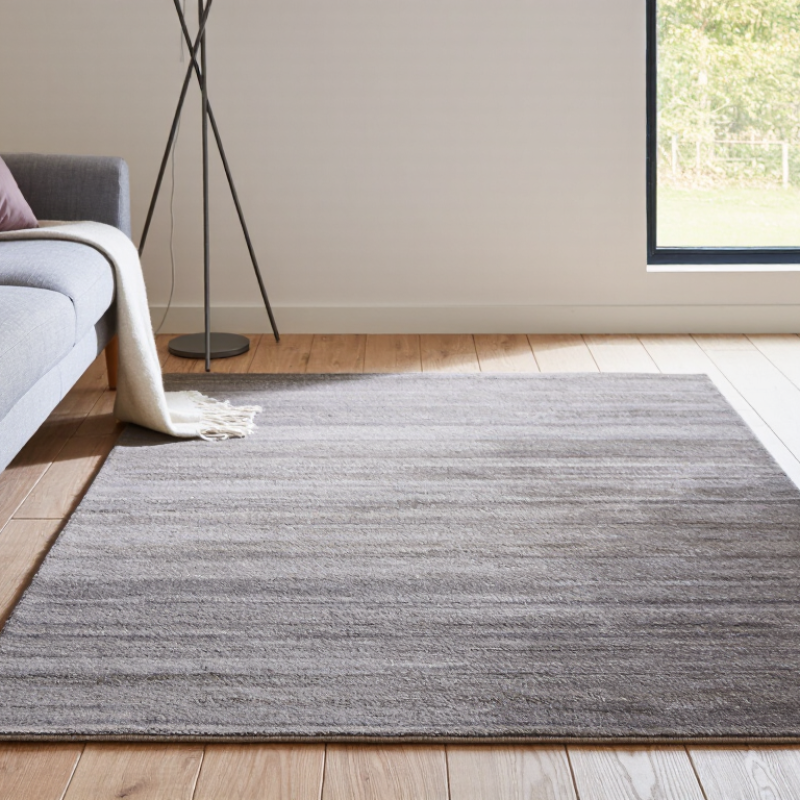
A grey washable rug should fit the room’s daily routine, not just its color scheme.
In an entryway, measure the space where shoes land and leave enough floor around the door to prevent curling or catching. For a busy kitchen, choose a low-pile design that sits flat near cabinets and can be lifted without moving half the room. Check the care label before buying; “washable” does not always mean every machine can handle the rug’s size. A damp rug needs room to dry fully.
In a bedroom, a softer, larger rug can extend beyond the bed so feet land on fabric in the morning. For a child’s room or a pet’s favorite spot, consider how often spills and muddy prints occur, and whether the rug’s backing suits your floor. Grey can make small marks less noticeable, but it will not conceal every stain. Its tone may also look warmer or cooler under different bulbs. Check a sample in the room, if possible. I’d resist choosing by appearance alone: a rug that is awkward to wash may stay dirty longer than expected. And measurements can be imperfect; mark the proposed size on the floor with paper before ordering.
Comparing Materials, Pile Heights, and Weave Types
Choose the fiber before judging softness. Textile Exchange’s Materials Market Report 2024 estimates polyester accounted for 57% of global fiber production in 2023. That figure shows broad availability, not proof that a particular rug will survive repeated washing. Polyester and polypropylene often handle everyday spills well, but oil-based marks can still linger. Cotton feels soft and may shrink or lose shape if care instructions are ignored. Wool has a springy feel, yet often calls for gentler cleaning. Check the label, including the backing material. Feel the edge.
Pile height and weave affect cleaning as much as comfort. Low-pile rugs usually release crumbs more easily and dry sooner after washing; deep pile can hold grit and moisture near the base. A flatweave is thin, light, and often reversible, making it practical under a dining table. Tufted construction feels plusher, but its backing may limit machine washing. Run your hand across the surface, then bend a corner: loose yarns or a stiff, heavy backing deserve a closer look. Not foolproof. A “washable” label is not a universal test result, so compare the stated wash temperature, drying method, and rug dimensions with your actual machine before buying.
Evaluating Washability, Durability, and Care Requirements
A washable rug is only convenient if it fits your washing setup. Check the care label for water temperature, cycle limits, and drying instructions before buying. Then measure your washer opening, not just its advertised capacity. A thick rug can become heavy when wet. That matters.
Look closely at the backing and edge stitching, since repeated washing can loosen weak seams or make some backings stiff. If possible, inspect a sample and rub it gently to see whether the pile sheds. Grey hides some everyday dust, but pale shades may show muddy footprints, while charcoal can reveal lint. There is no perfect shade. Choose one that suits your room and cleaning habits.
Care needs vary by material, so avoid assuming every “washable” rug can go through the same routine. Spot-test a small area first, and follow the maker’s directions for detergent and drying. Air-drying may take longer, especially in a humid room. Check that the rug is fully dry underneath before putting it back; trapped moisture can leave an unpleasant smell. Even with careful use, the color may fade over time. That is worth considering.
7 Tips for Choosing the Best Grey Washable Rug
Compare common rug constructions by typical care convenience. Ratings are qualitative guidance, not standardized test results; always check the product’s care label before washing.
Care tip: Check the rug’s washing instructions, backing, and size before buying. Use a suitable wash cycle, avoid overloading the machine, and air-dry when the care label recommends it.