How to Choose the Best Office Carpet
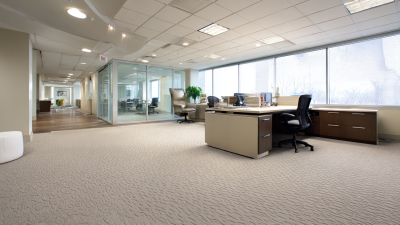
Choosing office carpet begins with observing how people actually use each room. A quiet meeting space has different demands from a busy entrance. Foot traffic matters. So do chair movement, cleaning access, and the noise of rolling casters. A useful Carpet Office plan considers fiber, pile height, backing, color, and installation together. Nylon often suits frequent use. Solution-dyed fibers may simplify stain care, but check product specifications. Low, dense pile can let chairs move more smoothly than a deep, soft surface. Still, no carpet is maintenance-free. Test it first.
Before choosing, note where sunlight falls, where dirt enters, and how often furniture shifts. Ask for samples, then view them under your office’s own lighting. A warm gray can look unexpectedly blue beside cool daylight. In a hallway, a darker pattern may disguise everyday soil, yet it may not suit every brand palette. Request documented wear ratings and cleaning guidance, and compare installed cost rather than material price alone. Carpet tiles can make localized replacement easier, though seams may show and spare tiles need storage. Broadloom creates a more continuous appearance, but repairs may take more planning. Ask the installer about subfloor moisture and doorway transitions; small defects there can become daily annoyances. These are practical trade-offs, not rules. I would not treat any single wear rating as a complete answer. The right selection balances comfort, acoustics, appearance, and upkeep against the real budget and schedule. One detail is easy to miss: staff feedback.
Map Office Traffic to EN 1307 Commercial Classes 31, 32, and 33
How to Choose the Best Office Carpet
Map Office Traffic to EN 1307 Commercial Classes 31, 32, and 33
Office carpet selection starts with an honest traffic map. Class 31 suits areas with light or occasional commercial use, such as a small private office. Class 32 is designed for general commercial use and often fits typical offices or meeting rooms. Class 33 is intended for heavy use, making it a stronger choice for busy corridors, receptions, and open-plan workspaces. Think about daily footfall, not just the room’s appearance. A quiet-looking hallway can still carry constant traffic.
Class numbers are useful, but they do not tell the whole story. Check the product documentation to confirm its EN 1307 class. Then consider chair castors, rolling loads, cleaning routines, and likely spills. These details affect how well carpet performs in real working conditions. Class 33 may be unnecessary in a lightly used office, while class 31 could wear sooner in a crowded reception. It is easy to misjudge traffic. Walk the space during a busy hour before deciding.
Tips: Mark the busiest routes on a simple floor plan. Compare those areas with the quieter rooms, then match each zone to an appropriate class. Ask for written performance details, too. Don’t rely on appearance alone.
Compare Nylon, Polypropylene, and Wool for Resilience and Maintenance
For busy office corridors, nylon is usually the strongest candidate for resilience. Its fibers recover better from repeated compression, so chair paths and doorway traffic are less likely to look permanently flattened. Polypropylene resists moisture and many stains, making it practical near coffee stations. But it tends to retain crush marks under heavy foot traffic. Wool feels warm and can mask small amounts of soil, yet it needs gentler care. Woolmark’s wool-fibre guidance reports that wool can absorb up to 35% of its weight in moisture before feeling wet. That is useful context, not spill protection. A wet coffee spill still needs prompt attention.
Maintenance habits matter as much as fiber choice. The Carpet and Rug Institute’s commercial carpet maintenance guidance recommends daily vacuuming in heavy-traffic areas and prompt spot cleaning. Nylon generally tolerates this demanding routine well. Polypropylene can be easier to clean after spills, though embedded oily soil may take more work. Wool may need cleaning products suited to wool fibers; harsh treatments can damage them. Small details count. Check the carpet’s care instructions before choosing a cleaning method.
Ask suppliers for independent abrasion and appearance-retention test results, not just broad durability claims. ASTM methods can help compare samples under controlled wear, but office traffic varies. I would test a sample under a rolling chair, too. It is an imperfect simulation, but it can reveal flattening that a showroom swatch hides.
How to Choose the Best Office Carpet: Nylon, Polypropylene, and Wool
Typical moisture regain is the amount of moisture a fiber absorbs under standard conditioning, expressed as a percentage of its dry weight. These approximate textile-fiber values are not carpet-specific.
Polypropylene absorbs very little moisture, while wool absorbs more; this can affect drying after exposure to moisture, but does not by itself determine stain resistance. For office resilience, nylon generally recovers well from crushing, polypropylene can flatten more readily in heavy traffic, and wool has natural resilience but needs fiber-appropriate cleaning. Carpet construction, backing, and maintenance also matter.
Choose Carpet Construction: Cut Pile, Loop Pile, or 50 × 50 cm Tiles
Cut pile has upright yarn ends, giving it a softer feel underfoot and a more residential appearance. It can suit private offices or meeting rooms where comfort matters. In busy corridors, however, the surface may show footprints and flattening sooner, especially around desk chairs. Choose a dense, low pile and check its suitability for rolling chairs. A sample viewed in daylight may look different under office lighting.
Loop pile keeps yarn in small, uncut loops. A tight, low loop often handles regular foot traffic well and can be easier to maintain than a taller, softer surface. Still, loose loops may catch on chair components or sharp objects. Check the construction and maintenance guidance rather than relying on appearance alone. A useful distinction.
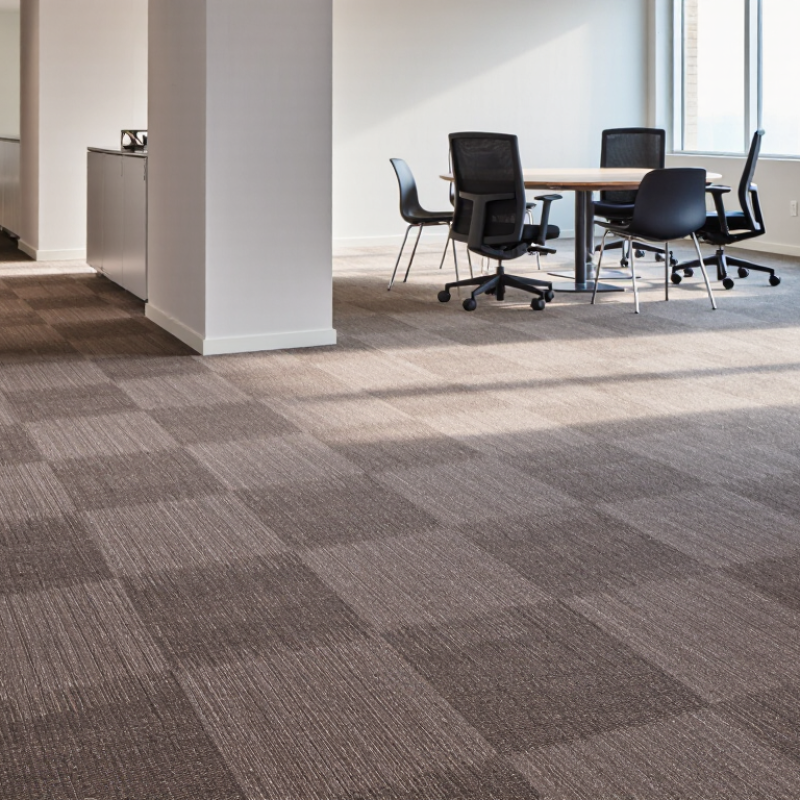
The 50 × 50 cm carpet tile format makes local repairs simpler: a stained or damaged tile can be replaced without lifting an entire room’s flooring. Tiles also work well when services run beneath a raised floor. Their seams can show if the floor is uneven or the installation is rushed, so inspect the subfloor and follow the specified laying pattern. Keep spare tiles from the same batch; matching replacements later is not always easy. Tiles can feel less seamless underfoot, which matters in quiet rooms.
There is no perfect option.
The right construction depends on traffic, cleaning routines, chair use, and how often the space changes.
Check Appearance Retention with the ASTM D 5252 Hexapod Test
How to Choose the Best Office Carpet
Check Appearance Retention with the ASTM D 5252 Hexapod Test
A carpet sample can look crisp under showroom lights and tired after months of rolling chairs. Ask for ASTM D5252 Hexapod test results. The ASTM standard describes a controlled method for mechanically abrading carpet specimens, helping buyers compare how pile surfaces change under repeated action. Look for the test duration and the result, not just a claim that a carpet was “tested.”
Small details matter.
For a clearer visual comparison, check whether the supplier also reports ratings under ASTM D7330. This method uses a 1-to-5 appearance-retention scale, where higher ratings indicate less visible change. Compare results only when carpet construction and test conditions are comparable. A dense, low pile may suit chair routes, while a softer surface could show tracking sooner. Inspect the entry lane, desk clusters, and turns near meeting rooms; those spots rarely wear evenly. A lab test is useful, but it cannot reproduce every office’s dirt, cleaning routine, or traffic pattern. Not a lifespan guarantee. I would treat the score as one selection tool, then request a sample and inspect it under ordinary office lighting.
Verify Indoor-Air Labels, Fire Codes, Warranty, and Lifecycle Cost
Choosing office carpet is not only a color decision.
Ask for current indoor-air certification and chamber-test documentation, not a sales sheet alone. The U.S. EPA’s The Inside Story: A Guide to Indoor Air Quality reports that concentrations of some indoor pollutants are often two to five times higher than outdoor levels.
This is a building-wide warning, not proof that carpet caused them.
Check that the tested carpet, backing, adhesive, and installation system match your specification.
Details matter.
Verify fire performance against the building’s occupancy and applicable code. ASTM E648 measures flooring’s critical radiant flux, while NFPA 101 sets requirements for specified applications. Ask for test results covering the exact carpet construction. Review warranty exclusions for rolling chairs, seams, moisture, and cleaning methods.
A long warranty can look reassuring. Read its conditions.
Compare lifecycle cost, not just installed price.
The Whole Building Design Guide’s life-cycle costing framework includes purchase, operation, maintenance, replacement, and disposal. Build a 10-year worksheet covering installation, cleaning, repairs, furniture moves, and downtime. Use actual maintenance bids where possible, and mark uncertain replacement assumptions as estimates. A lower-priced carpet may need more frequent replacement; site-specific figures will show whether it truly saves money.