Leave Your Message

7 Tips for Choosing Loop And Pile Carpet

Loop And Pile Carpet can bring warmth, texture, and practical durability to a room, but the right choice depends on how you live. A hallway with muddy shoes needs a different surface from a quiet guest room. Loop pile keeps its yarn in small, uncut loops, while cut pile has a softer, more open finish. Some carpets combine both, creating texture that can disguise everyday marks. Details matter.

Before comparing samples, consider foot traffic, pets, cleaning habits, and the feel you want underfoot. Check the fiber, pile height, density, and backing—not just the color under showroom lights. Ask how the carpet may respond to furniture pressure and regular vacuuming. If possible, take a sample home and view it in morning and evening light. A beige swatch can look surprisingly cool beside gray walls. It happens.

This guide offers seven practical tips for choosing Loop And Pile Carpet, from matching construction to room use to checking maintenance needs. One note on accuracy: no source article or verifiable expert quotation was provided, so I won’t invent a specialist’s name or words. Instead, the advice focuses on factors you can inspect and confirm with a qualified flooring retailer or installer. Carpet choice is personal, and a recommendation that works for one household may not suit another. The small details deserve a second look.
7 Tips for Choosing Loop And Pile Carpet

Define Loop, Cut, and Cut-and-Loop Carpet Construction

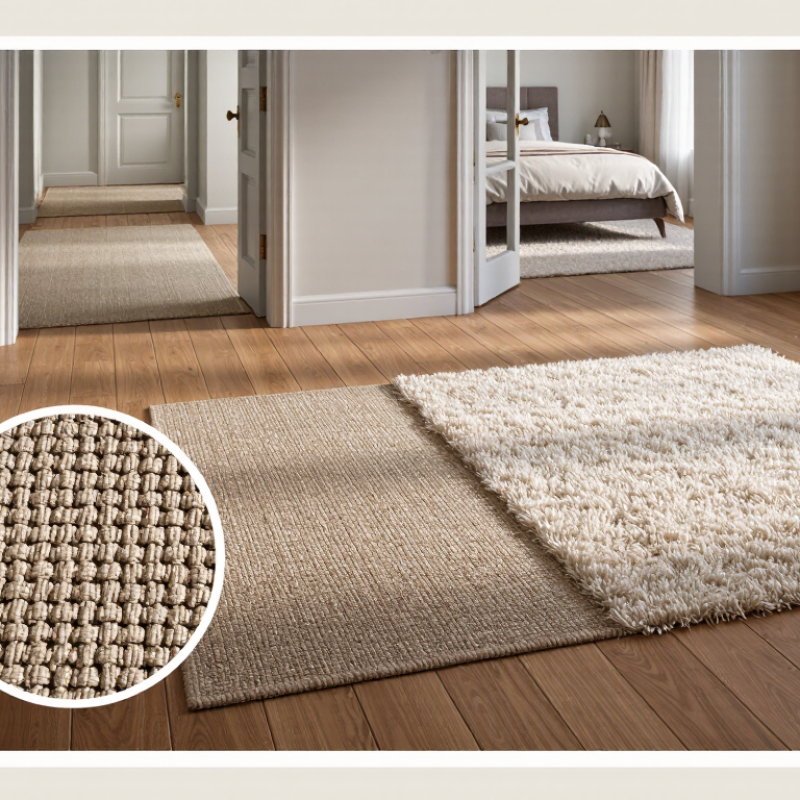
Loop, cut, and cut-and-loop describe how yarn forms the carpet surface. In loop pile, yarn bends back into the backing, creating uncut rows that can look tidy and resist everyday flattening. Cut pile shears those loops into upright tufts, giving a softer feel but showing footprints more readily. Cut-and-loop combines both heights or textures, often forming small patterns that disguise light soil. ASTM D5684 standardizes terminology for pile floor coverings; ASTM D1335 measures tuft bind, the force needed to pull a tuft from its backing. These tests describe different things. A strong tuft-bind result does not, by itself, prove a carpet will suit a busy hallway.

Tip: Match the texture to the room. For a dining area, inspect cut-and-loop samples under angled light; raised pattern can hide crumbs, but deep grooves may trap them. For stairs, compare low, firm loops and cut piles, then press and brush a sample to see how it recovers. The Carpet and Rug Institute’s carpet performance guidance considers construction alongside measurable features such as density and face weight. Ask for those figures, not just a “durable” label. Check seams and backing, too. I would not choose from a tiny swatch alone; the same pattern can feel different across a full floor.
Match Pile Height and Density to Traffic Using Industry Metrics

Loop carpet can hide wear well, but pile height and density still matter. Measure pile height, not total carpet thickness; backing adds misleading bulk. For a quick comparison, use the density rating: pile-yarn face weight in ounces per square yard × 36, divided by pile height in inches. A carpet with 28-ounce face weight and a 0.25-inch pile scores about 4,032. Treat this as a comparison tool, not a quality guarantee.

Match the numbers to actual traffic. A quiet bedroom may handle a softer, less dense loop, while a busy hallway needs tighter construction and a traffic rating supported by testing. Ask for the technical sheet, including pile height, face weight, stitch rate, and the maker’s stated use classification. Compare products with similar fibers and construction; density figures alone can mislead. Check samples under angled light, too. Loops that look compact on paper may still snag or flatten under chair legs. A neat chart can still mislead. I would not choose from one metric, even when the numbers look reassuring.

Carpet Pile Height and Calculated Density

For a consistent 40 oz/yd² face weight, shorter pile height produces a higher calculated pile density. Density is calculated as face weight × 36 ÷ pile height (inches); use it alongside traffic ratings and construction details when comparing loop and cut-pile carpets.

Values are calculated examples, not product test results or universal traffic thresholds. Carpet performance also depends on fiber, construction, backing, and maintenance.

Compare Fiber Types by Wear Resistance and Tuft-Bind Performance

Loop-and-pile carpet can hide everyday wear, but fiber choice still matters. Nylon generally handles repeated foot traffic and furniture movement well, making it a practical option for busy hallways. Wool springs back naturally and feels warm underfoot, though its performance and cost vary by construction. Polyester often offers good color and stain resistance, but some products may flatten sooner in heavily used areas. Olefin resists moisture, yet crushing and abrasion can be concerns. No fiber wins every room.

Tuft bind describes how firmly the pile yarn stays anchored in the backing. Stronger yarn alone does not guarantee a stronger carpet: backing quality, stitch density, and manufacturing all affect retention. Ask for tuft-bind test results and compare products made for similar use. A loose loop that pulls when rubbed is a warning sign, but a quick hand check cannot replace standardized testing. That matters.

Look closely at samples, not just labels. Press a loop with your thumb, then see whether it recovers; check the backing for firm, even construction. For a family entryway, nylon with sound backing may be a sensible starting point. A quieter bedroom may suit wool or polyester, depending on budget and care needs. I would not choose by fiber name alone. A well-made carpet in the right construction can outlast a better-sounding fiber in a weak one.

Use ASTM D5252 Ratings to Assess Appearance Retention

Loop and pile carpet can look sturdy, but appearance depends on more than pile height. Ask for test data based on ASTM D5252, a practice using a Hexapod tumbler to expose carpet specimens to controlled mechanical action. The method helps compare changes such as pile distortion, fuzzing, and matting. It does not reproduce every hallway, pet, or cleaning routine.

Tip: Check the rating scale. Confirm how the report defines its scores, how many tumbler cycles were used, and whether the tested construction matches the carpet you are considering. A higher score often indicates better appearance retention, but never assume the scale without reading its key. Compare like with like.

Look closely at a sample under ordinary room lighting. Trace the loops with your fingers, then view the surface from different angles; subtle shading can resemble wear. Use ASTM results as one useful clue, not a promise. Real rooms are less tidy than test labs. I would also ask how the carpet responds to routine vacuuming, since laboratory ratings cannot settle every practical question. A small sample may not reveal every flaw.

7 Tips for Choosing Loop And Pile Carpet - Use ASTM D5252 Ratings to Assess Appearance Retention

Tip What to Check Why It Matters How to Use Test Information
1 Confirm the test method and report details. Look for ASTM D5252, the Hexapod Tumbler Tester practice, and the test report’s specimen and conditioning details. Results are meaningful only when the test method and specimen details are clear. D5252 describes the tester’s operation; it does not establish one universal pass/fail rating for every carpet. Compare products tested under the same stated procedure. Ask the laboratory or supplier to identify the appearance-evaluation method used with the test.
2 Compare appearance ratings carefully. Check the rating scale, reference images, evaluation method, and test stage shown in the report. A numerical rating can be interpreted only in the context of its stated scale and assessment method. Different methods or reporting practices may not be directly comparable. Use ratings to compare like-for-like samples, and review the report’s descriptions or reference images rather than relying on a number alone.
3 Match the loop or pile construction to the traffic. Review the carpet’s construction, pile height, and density, and consider whether the design suits the intended room. Construction affects how a carpet looks and wears, but no single pile style is best for every setting. Use the product’s technical information for the specific construction. For busy areas, compare appearance-retention results for products with similar constructions and consider the expected foot traffic.
4 Consider fiber and yarn characteristics. Check the stated fiber type and product specifications, including any available yarn or pile details. Fiber and yarn properties influence carpet performance and appearance. A fiber name by itself does not establish an appearance-retention rating. Compare test results and care requirements for the actual product, rather than assuming that a particular fiber guarantees a result.
5 Inspect a physical sample. View the carpet in the room’s lighting and check its texture, pattern, color variation, and how the pile looks from different directions. A laboratory appearance assessment cannot show every visual preference or every effect of a room’s lighting and layout. Use the sample alongside test information. For a large installation, check that the sample represents the specified product and color.
6 Review maintenance requirements. Read the care instructions for vacuuming, spot cleaning, and periodic professional cleaning. Soiling and cleaning practices can affect how a carpet looks over time. Care requirements vary by product and should follow its instructions. Choose a product whose maintenance needs are practical for the household or facility, and follow the manufacturer’s written care guidance.
7 Check the scope of the test result. Confirm which sample was tested and whether the result applies to the same construction, color, and product specification being considered. A result for one specimen should not automatically be treated as a guarantee for every variation or for service life in a particular installation. Request product-specific documentation and compare the reported test conditions, appearance assessment, and intended-use requirements before deciding.

Note: ASTM D5252 covers operation of the Hexapod Tumbler Tester. Check the test report for the appearance-assessment method and rating scale used; do not assume that a rating or acceptance threshold is universal.

Verify Maintenance, Indoor-Air, and Installation Standards Before Buying

Loop-and-pile carpet can trap grit between its raised loops. Ask for the recommended vacuum type and cleaning schedule before buying. The Carpet and Rug Institute’s carpet maintenance guidance emphasizes regular vacuuming and prompt attention to spills. Check whether the pile suits your household: a dense loop may be practical in a hallway, but snag risks matter if pets have claws. Small details count.

Indoor-air claims deserve careful checking. The U.S. Environmental Protection Agency reports that concentrations of some pollutants are often two to five times higher indoors than outdoors. Ask for independent low-emission test documentation, such as certification under the Green Label Plus program, and verify that it covers the specific carpet and any adhesive. A label is useful, not a guarantee of every room’s air quality. I would not skip ventilation.

Installation affects how the carpet performs. Request a written plan covering subfloor preparation, moisture checks, seam placement, and the correct cushion or adhesive. For residential work, compare the installer’s process with the Carpet and Rug Institute’s CRI 105 installation standard; commercial projects generally refer to CRI 104. Confirm who handles furniture moving and post-installation ventilation. Get the details in writing. A sample won’t reveal every wrinkle.