China Top 10 Small Kitchen Carpet Manufacturers
China’s small-home market has increased demand for practical, attractive kitchen flooring. This guide examines the China Top 10 Small Kitchen Carpet Manufacturers and their product capabilities. It considers material quality, production experience, customization, delivery consistency, and after-sales support. These factors matter when a carpet faces water drops, oil splashes, crumbs, and daily foot traffic.
Lena Zhou, an independent kitchen textile consultant with more than fifteen years of sourcing experience, says, “A useful Small Kitchen Carpet should handle ordinary messes without making the kitchen feel ordinary.” Her view reflects a practical standard. Good manufacturers should offer low-pile surfaces, stable backing, neat edge binding, and washable construction. They should also explain fiber content clearly. Polyester, polypropylene, cotton blends, and recycled materials can perform differently under heat and moisture. Buyers need details, not attractive promises.
No ranking is perfect. Factory scale does not always guarantee better performance. A smaller supplier may provide closer communication and more flexible designs. However, weak inspection systems can create uneven sizes, curling edges, or fading patterns. This guide therefore looks beyond catalogs. It reviews manufacturing evidence, sample quality, packaging methods, and customer feedback where available. A strong supplier should welcome testing and answer difficult questions. Small details count. A carpet that stays flat beside a cabinet can prevent daily frustration. The selected manufacturers may suit different budgets and project sizes, but readers should still request samples before placing an order. Kitchen conditions vary, and one overlooked weakness can become obvious after installation.
What Are Small Kitchen Carpets and Why Choose Chinese Manufacturers?
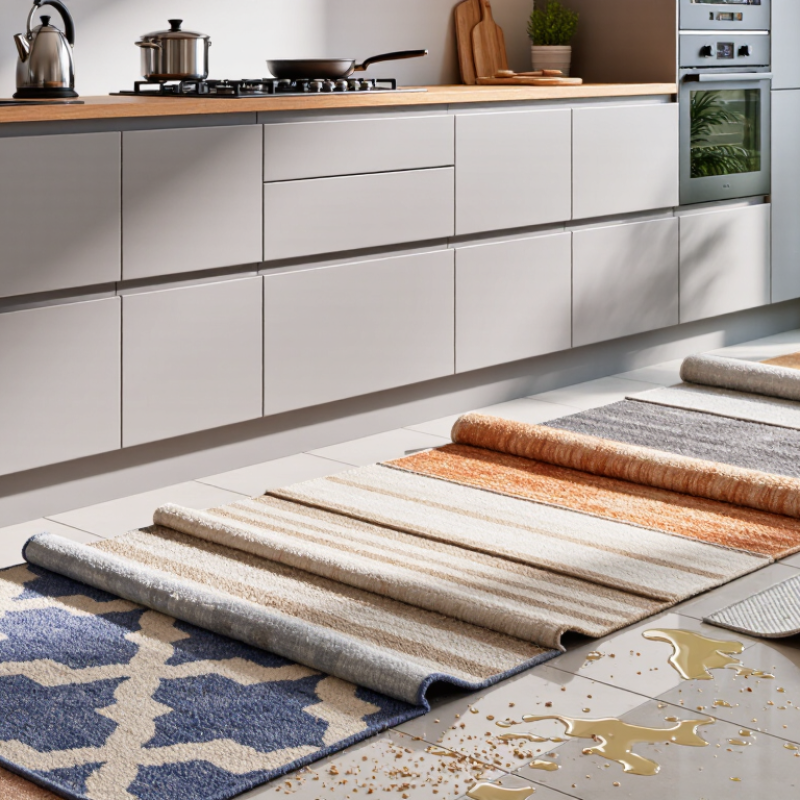
Small kitchen carpets are compact floor coverings designed for narrow cooking areas, usually placed near sinks, counters, or stoves. They reduce contact with cold flooring and help catch small splashes, crumbs, and grease. Common materials include polyester, polypropylene, cotton blends, and recycled fibers. Their backing should provide stable grip without damaging tile, vinyl, or wood flooring.
Chinese manufacturers attract buyers through flexible production and broad material access. Many factories can adjust carpet length, width, thickness, edge binding, patterns, and packaging for different kitchen layouts. Experienced suppliers often provide sample approval, color references, production inspections, and basic test reports. These steps help buyers check shedding, odor, color stability, and backing adhesion before larger orders. Practical experience shows that clear measurements prevent many avoidable mistakes.
Cost is another reason to consider China, but the lowest quotation is not always the best choice. A cheap backing may curl after washing or slide across polished tiles. Not every factory offers the same quality control. Buyers should request material details, washing instructions, inspection photos, and realistic delivery terms. Small trial orders are useful, although they may increase the unit cost. That compromise is worth considering. A reliable supplier should answer technical questions clearly and accept reasonable quality checks.
How to Evaluate China’s Top Small Kitchen Carpet Manufacturers
How to Evaluate China’s Top Small Kitchen Carpet Manufacturers
China’s small kitchen carpet sector serves homes, apartments, and hospitality projects. Grand View Research valued the global carpets and rugs market at approximately USD 72.39 billion in 2023. Its report also projects steady growth through 2030. This expansion makes supplier evaluation more important, not easier.
Start with material evidence. Ask for fiber specifications, backing composition, pile density, and colorfastness results. A reliable manufacturer should provide recent laboratory reports, not only attractive product photographs. Check whether printed dimensions match physical samples. Small errors can affect cabinet clearance and door movement. Request samples after washing and repeated foot traffic. The carpet should resist curling at the edges.
Production control matters equally. Review quality procedures, inspection records, and defect-handling policies. ISO 9001 certification can indicate structured management, but it does not replace independent testing. The International Trade Centre highlights product quality and delivery reliability as important factors in supplier competitiveness. Compare lead times, minimum order quantities, packaging methods, and replacement terms. A low quotation may hide inconsistent batches or weak after-sales support.
Ask practical questions. Can the factory reproduce one color accurately? Can it control odor and shedding? Does it document restricted-substance testing for the destination market? These details reveal experience. Video audits help, although they are imperfect. Factory visits offer stronger evidence when possible. I would also test a second production batch. One successful sample proves little. The best evaluation combines documents, physical inspection, communication speed, and honest discussion of limitations.
Profiles of the Top 10 Small Kitchen Carpet Manufacturers in China
China’s small kitchen carpet sector includes varied manufacturers, from compact workshops to export-oriented factories. The following profiles focus on practical strengths, production experience, and points buyers should verify.
Profile one features a manufacturer known for low-pile polypropylene mats. Its heat-pressed edges suit busy kitchens.
Profile two specializes in washable polyester carpets with quick-drying surfaces.
Profile three produces printed anti-slip runners for narrow galley kitchens.
Profile four focuses on recycled fibers, although buyers should request evidence for recycled-content claims.
Profile five offers custom sizes, including mats for spaces near sinks and ovens.
Profile six uses tufting equipment to create denser surfaces and sharper patterns.
Profile seven serves hospitality projects and manages larger repeat orders.
Profile eight makes PVC-backed carpets that resist moisture, but ventilation during production deserves attention.
Profile nine develops neutral designs for modern apartments and provides sample approval before bulk manufacturing.
Profile ten combines manual inspection with automated cutting, helping control uneven corners.
A careful assessment should cover fiber composition, backing adhesion, colorfastness, odor levels, and packaging protection. Ask for test reports from recognized laboratories, not only factory photographs. Check whether production samples match the approved specification. This step is often overlooked. Factory visits can reveal crowded storage, inconsistent labeling, or weak quality records. Those details matter. Lead times, minimum order quantities, replacement policies, and communication quality also separate reliable suppliers from convenient-looking options. Rankings can change because equipment, staff, and export experience develop over time.
Key Differences in Materials, Designs, Prices, and Customization
China’s top 10 small kitchen carpet manufacturers differ sharply in materials, design control, pricing, and customization. Polypropylene remains popular for budget orders because it resists stains and dries quickly. Polyester offers softer color effects, but its pile can flatten sooner. Nylon usually costs more and handles repeated walking better. PVC or TPR backing improves grip on tiled floors. Natural wool feels warmer, yet it needs greater care and raises the quotation.
Grand View Research estimated the global carpets and rugs market at USD 72.39 billion in 2023, with continued growth expected through 2030. This demand encourages Chinese factories to offer many patterns, including washable runners, printed geometric motifs, and low-pile mats for cabinet doors. Prices vary with fiber, backing thickness, printing method, edge binding, packaging, and order quantity. Custom sizes may begin with modest minimum order quantities, while unusual shapes, private labels, and color matching usually require higher volumes. Factory claims still need testing.
Tips: Request sample swatches and a water-resistance test. Check the backing after repeated bending. Ask for pile height, weight, shrinkage, and colorfastness data. Compare quotations using the same specifications. A cheaper mat is not always cheaper in use. I have seen attractive samples lose shape after washing. That weakness deserves attention. Insist on a pre-production sample, carton photos, and an agreed inspection standard before shipment.
How to Select the Right Chinese Manufacturer for Your Business
China Top 10 Small Kitchen Carpet Manufacturers
Selecting a Chinese manufacturer requires more than comparing online rankings. A practical shortlist should include factories with proven export experience, stable production capacity, and clear product documentation. Ask for business licenses, material specifications, test reports, and recent project references. Product samples reveal details that websites often hide, such as loose edging, uneven backing, or strong chemical odors.
Start with your exact requirements. Define carpet size, pile height, backing material, color tolerance, packaging, and target order volume. Request a written quotation with tooling, sampling, shipping, and inspection costs separated. Factory-direct pricing may look attractive, but inconsistent quality can damage your reputation. I once focused too heavily on unit cost. That decision created delays and extra inspection expenses.
Check communication quality before signing. Can the manufacturer answer technical questions clearly? Do they confirm changes in writing? A short video audit can show cutting tables, sewing areas, storage conditions, and worker safety practices. An on-site inspection is stronger when order value permits. Use an independent inspection company for pre-shipment checks, especially for large orders.
Test a small batch first. Measure dimensions, color consistency, stitching strength, slip resistance, and packaging durability. Keep approved samples as contract references. Payment terms should match verified milestones, not promises alone. Some manufacturers may accept custom designs but lack reliable development staff. That weakness deserves attention. Regular reviews can improve cooperation, although early assumptions are often wrong.
China Top 10 Small Kitchen Carpet Manufacturers: How to Select the Right Chinese Manufacturer for Your Business
This procurement scorecard uses a 100-point evaluation model for comparing Chinese small kitchen carpet manufacturers without ranking or displaying company-specific data. Product quality and customization receive the highest weights because they directly affect durability, fit, appearance, and customer satisfaction. Compliance, minimum order quantity, lead time, and landed cost help assess commercial and operational suitability.