Leave Your Message

What Is Rug Wool and Which Type Is Best for Rugs?

The referenced articles were not included, so I can’t verify an industry report or a named expert’s exact quotation. Please provide the source material, or confirm that you’d like an introduction without a direct expert quote.
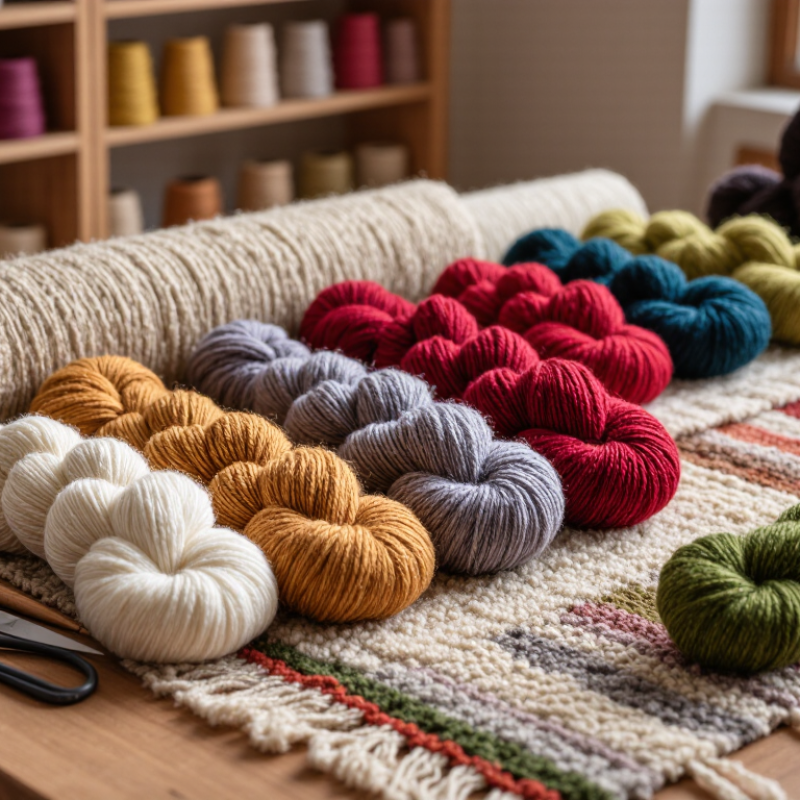
What Is Rug Wool and Which Type Is Best for Rugs?

What Rug Wool Is: A Keratin Fiber Graded by Micron Diameter

Wool is a natural animal fiber made largely of keratin, the same broad class of protein found in hair and nails. Its fineness is commonly described by micron diameter: one micron equals one-thousandth of a millimeter. A lower average micron usually means finer fibers; a higher one means coarser fibers. The measurement describes thickness, not the whole quality of a rug.

Finer wool can feel smoother against bare feet and may suit a bedroom or sitting area. Coarser wool often feels more textured and can be a practical choice for a busy entryway. But that rule is incomplete. Fiber length, natural crimp, yarn twist, pile height, and rug construction all affect how a rug feels and wears. A soft fiber in a loosely made pile may behave differently from the same fiber in a dense weave.

Look beyond the micron figure. Ask how the wool is graded and whether the number is an average, then consider where the rug will sit. Picture grit tracked across a hallway or a low table pressing into a thick pile. Those details matter. There is no single best micron range for every rug, and specifications do not always tell the whole story.

How Rug Wool Is Measured: Many Rug Grades Fall Around 25–40 μm

Rug wool is often described as measuring about 25–40 microns (μm), but micron means fibre diameter, not yarn thickness or pile height. One micron equals one-thousandth of a millimetre. The International Wool Textile Organisation’s IWTO-12 test method measures mean fibre diameter, helping mills compare wool samples consistently. A finer reading usually feels softer against the hand; coarser fibres can feel more substantial underfoot. The difference is tangible: fibres near 25 μm may feel smoother, while fibres near 40 μm can feel noticeably wirier.

USDA Agricultural Marketing Service wool-grade tables offer a useful reference: the 58s grade corresponds to 24.95–26.39 μm, and 56s to 26.40–27.84 μm. These are grading benchmarks, not a rule that determines whether wool suits a rug. A rug’s feel also depends on fibre crimp, yarn twist, pile density, and finishing. Micron figures can hide variation within a fleece, too. That detail matters.

For a busy hallway, a denser, more resilient pile may be more practical than choosing the lowest micron number. For a bedroom, softness may count more. Ask whether a stated micron value is a tested mean and which test method was used; otherwise, comparisons can be misleading. Even a reliable measurement cannot tell you exactly how a rug will feel beneath bare feet.

Which Wool Types Are Used in Rugs: New Zealand, British, and Himalayan

Rug wool comes from sheep fleece, but its feel depends on breed, climate, spinning, and finishing. New Zealand wool is often valued for its relatively fine, soft feel and natural light color. Its springy fibers can help a rug recover after footsteps and furniture pressure. It suits rooms where comfort underfoot matters. Still, softness alone does not guarantee durability; pile height and construction matter too.

British wool covers fleece from many breeds, so it is not one uniform material. Some varieties feel coarser and more textured than New Zealand wool, which can give a rug a sturdy, rustic character. The variation is real. Ask which breed or wool blend is used, rather than relying on “British wool” as a complete specification. A denser weave may be a better choice for a busy hallway than a deep, loose pile.

Himalayan wool is commonly associated with sheep raised in mountain regions, though the term can cover varied fibers and sources. Hand-spun yarn may show slight changes in thickness, giving the rug an uneven, tactile surface. That variation can be appealing, but it is not automatically a sign of quality. Wool labels can be vague. Check the rug’s construction, shedding guidance, and cleaning instructions before choosing; even well-made wool may shed some fibers at first.

How Crimp and Staple Length Affect Rug Resilience and Wear

What Is Rug Wool and Which Type Is Best for Rugs?

Crimp is wool’s natural wave. It helps fibers bend, then spring back under footsteps. Fine, frequent crimp can support a resilient pile, especially in busy hallways. But crimp alone does not predict wear. Fiber diameter, yarn twist, pile density, and backing also matter. A rug may feel springy in a showroom and still flatten where people turn.

Staple length shapes the yarn. Longer fibers can be spun into smoother, more continuous yarns, while shorter fibers create more exposed ends that may fuzz with abrasion. That is a tendency, not a rule; skilled spinning can change the result.

For measurable comparisons, ASTM D5252 evaluates carpet appearance after simulated traffic, while ASTM D1335 measures tuft-bind force. Ask for those test results, not just “durable wool.” Look for the test method, rating, and sample construction. The numbers need context. A dense, tightly twisted rug may outlast a softer one, even when both use resilient wool. And real rooms are imperfect tests: grit at an entry and a chair dragged across the pile can matter more than fiber claims.

Which Rug Wool Is Best: Match Fiber Grade to Traffic and Maintenance

Choosing rug wool is less about finding the “best” fiber and more about matching its feel and performance to the room. Fine wool feels soft underfoot and suits bedrooms or low-traffic sitting areas. It can show flattening sooner in busy walkways, especially when the pile is tall. Medium-grade wool offers a practical balance of softness and resilience for living rooms. Coarser wool often handles daily use well, though it may feel less plush. Not always.

For entryways, hallways, and dining spaces, look for resilient wool paired with a dense, tightly constructed pile. A firm surface usually recovers better from footsteps than a loose, high pile. Fiber grade alone cannot predict lifespan; yarn twist, rug construction, and care also matter. I would check the rug’s feel and backing, not rely only on a label. Labels can be vague.

Maintenance should shape the choice, too. Wool naturally holds some dust near the surface, so regular gentle vacuuming helps prevent grit from wearing fibers down. Spills need prompt blotting with a clean cloth; rubbing can distort the pile. Homes with pets or frequent messes may benefit from a shorter pile and a wool blend that is easier to manage. I still find wool’s care instructions vary more than shoppers expect. Ask how the rug should be cleaned before buying.

What Is Rug Wool and Which Type Is Best?

Typical wool fiber diameter by grade, with practical guidance for matching softness and upkeep to foot traffic.

How to use this: Fine wool generally feels softer underfoot; medium and coarser wool are common practical choices for busy areas. For high traffic, prioritize a dense, well-constructed rug with a lower pile, and vacuum regularly. Fiber diameter is only one factor—rug construction, pile height, and care also affect durability. Wool grading ranges vary by breed and grading system.